

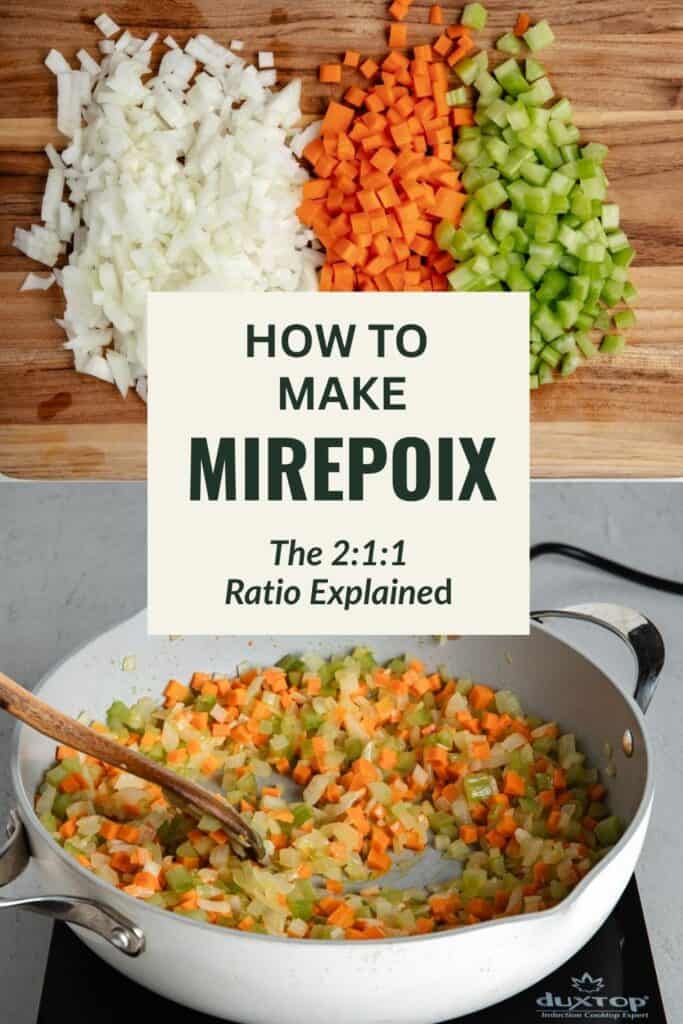

I'll teach you the classic 2-1-1 mirepoix ratio, with the exact proportions of onion, carrot, and celery that build the flavor base under every great stock, soup, and braise. You'll learn why the ratio matters, how to cut it for the dish you're making, and the one mistake that ruins it before the pan even gets hot.
Jump to:
What is Mirepoix?
Mirepoix (meer-PWAH) is a mixture of onion, carrot, and celery, cut and cooked together to build the flavor base for stocks, soups, sauces, and braises.
The name comes from the Duke of Lévis-Mirepoix, an 18th-century French nobleman whose chef is credited with popularizing the technique. The ratio his kitchen left behind became one of the building blocks of classical French cooking.
Mirepoix is usually sweated low and slow until soft and translucent without color. But that's not the only move. For a roasted chicken stock, and veal stock, you'll often roast and caramelize the mirepoix instead.
That roasted veal stock is also the starting point for a demi-glace, the rich, reduced sauce that ends up under a classic steak.
Mirepoix Video
The Classic Mirepoix Ratio
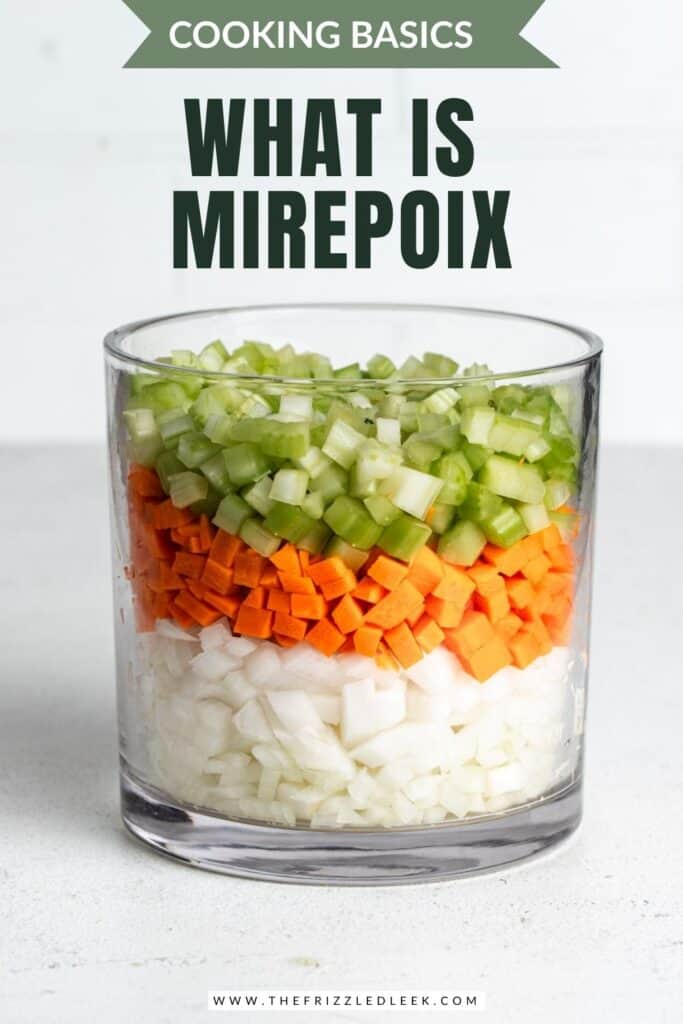
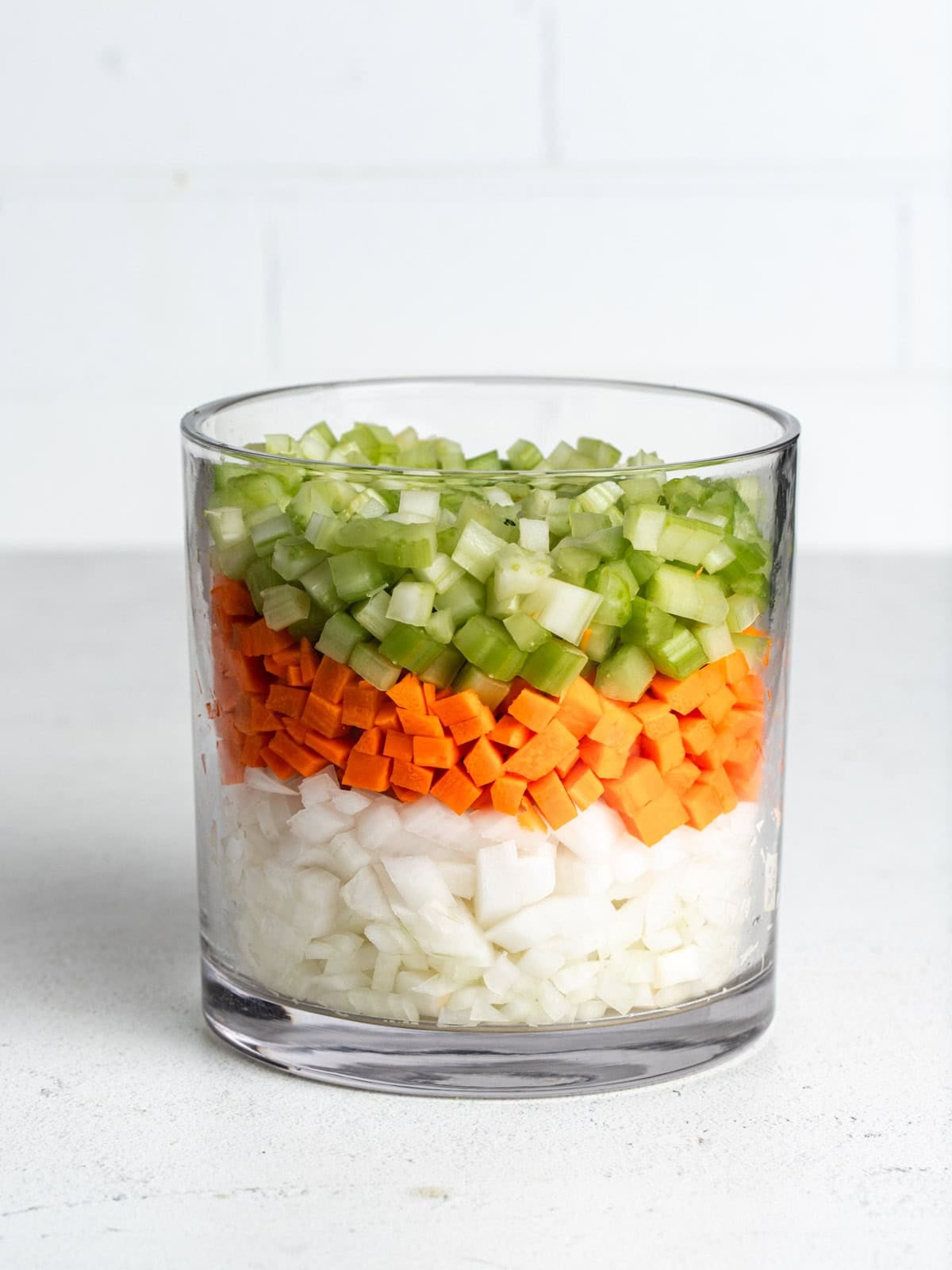
The classic mirepoix ratio is 2 parts onion, 1 part carrot, 1 part celery by weight, not volume. For a batch using 1 pound (450g) total, that's roughly 8 oz (225g) onion, 4 oz (115g) carrot, and 4 oz (115g) celery.
Get the ratio wrong and you'll taste it. Too much celery turns the base bitter. Too much carrot makes it overly sweet. The 2-1-1 ratio is the balance point where none of the three vegetables overpowers the other two.
How To Cut Mirepoix: Small, Medium, and Large Dice
The size you cut mirepoix is all about cook time. Match the cut to how long the mirepoix will actually be in the pot. Check out my Knife Skills 101 blog post where I cover every knife cut.
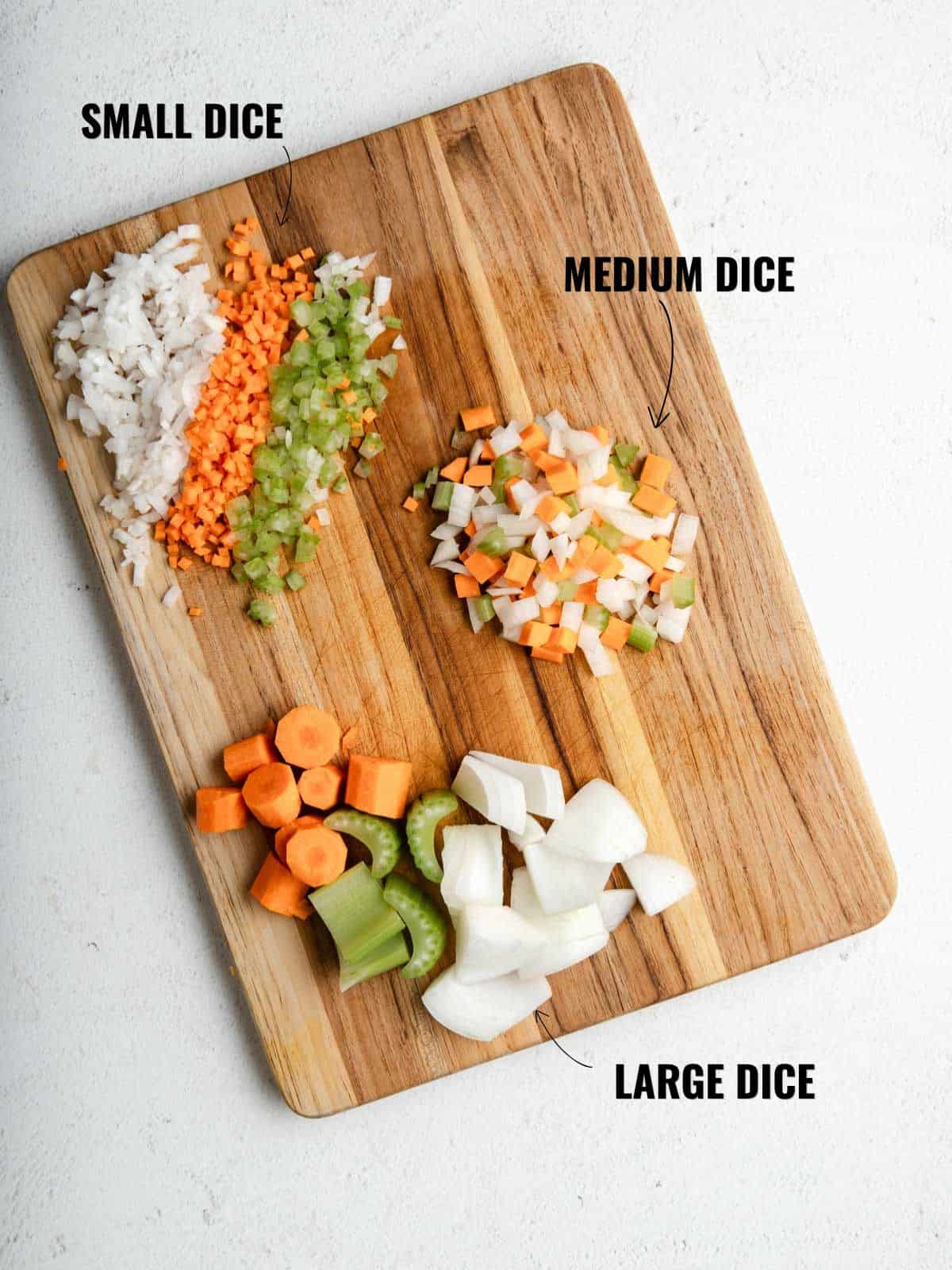
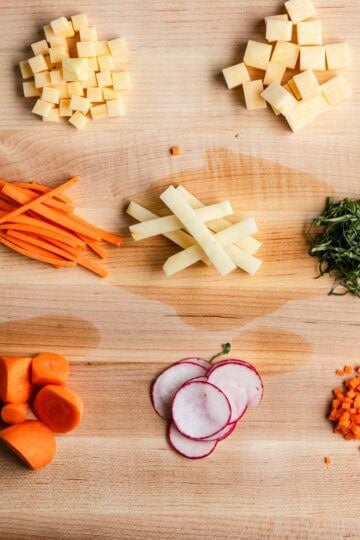
- Brunoise (small dice, ⅛ inch): Use for quick sauces and pan sauces where the mirepoix can break down and soften fast.
- Medium dice (¼ to ½ inch): The standard cut for soups and most braises. Cooks down without turning to mush before the rest of the dish is done.
- Large dice (¾ to 1 inch): Best for stocks you'll strain out at the end.
Save This Recipe!
How to make Mirepoix
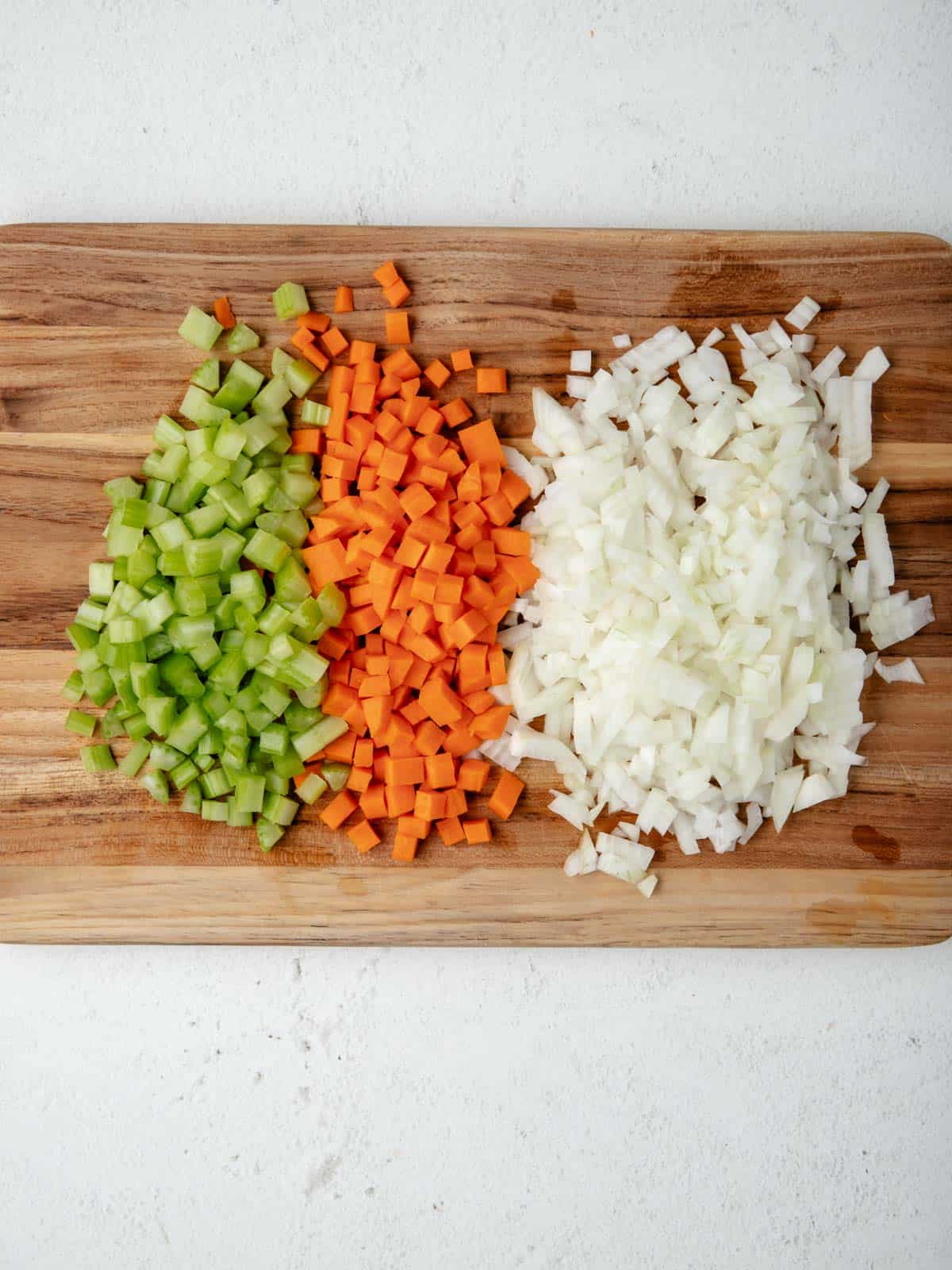
Step 1. Prep the vegetables.
Dice the onion, carrot, and celery to the size you need - see the cuts above. Keep the pieces uniform in size so everything cooks at the same rate. Getting everything cut and ready before the pan heats up is mise en place in practice.
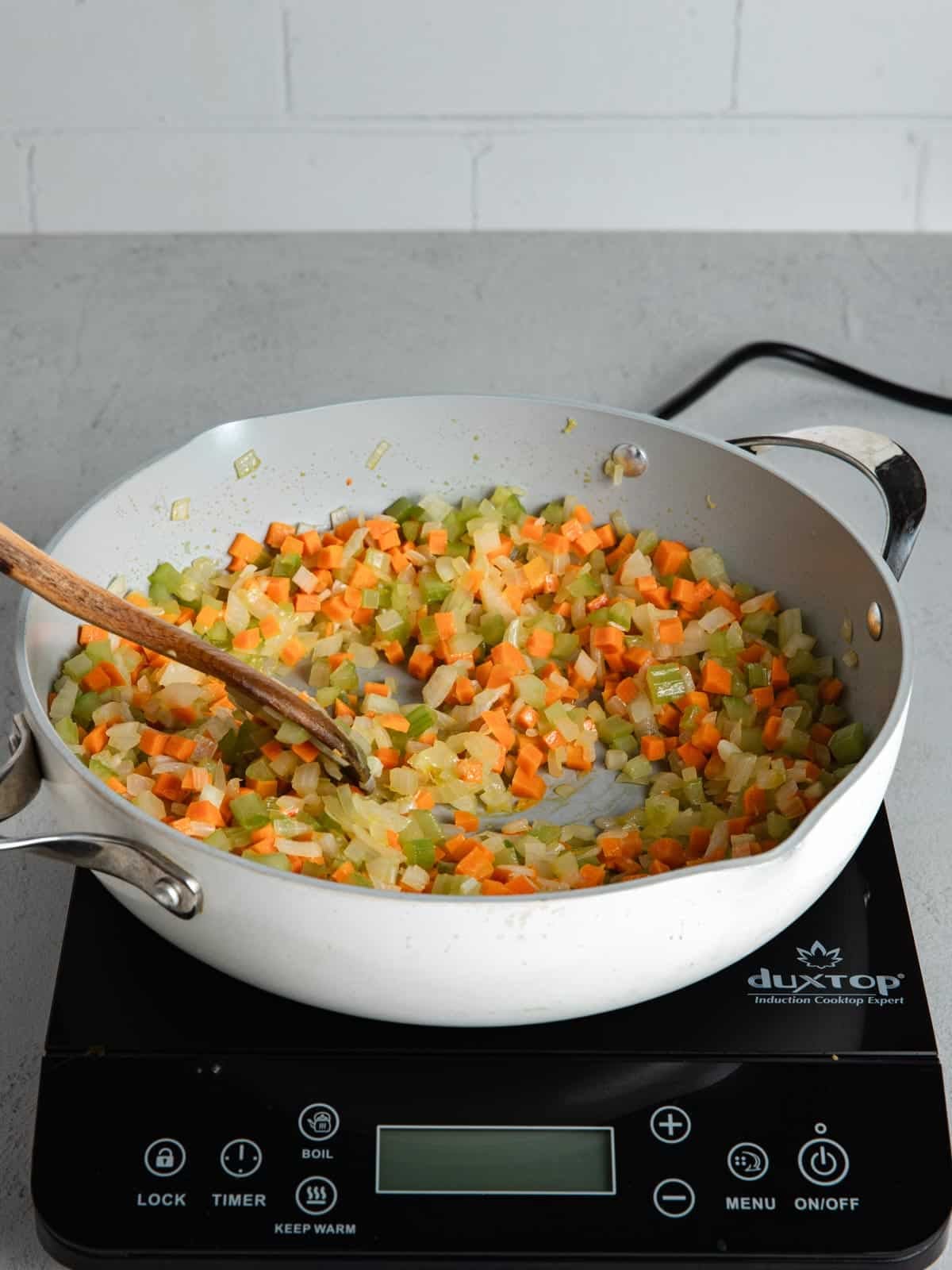
Step 2. Sweat the mirepoix.
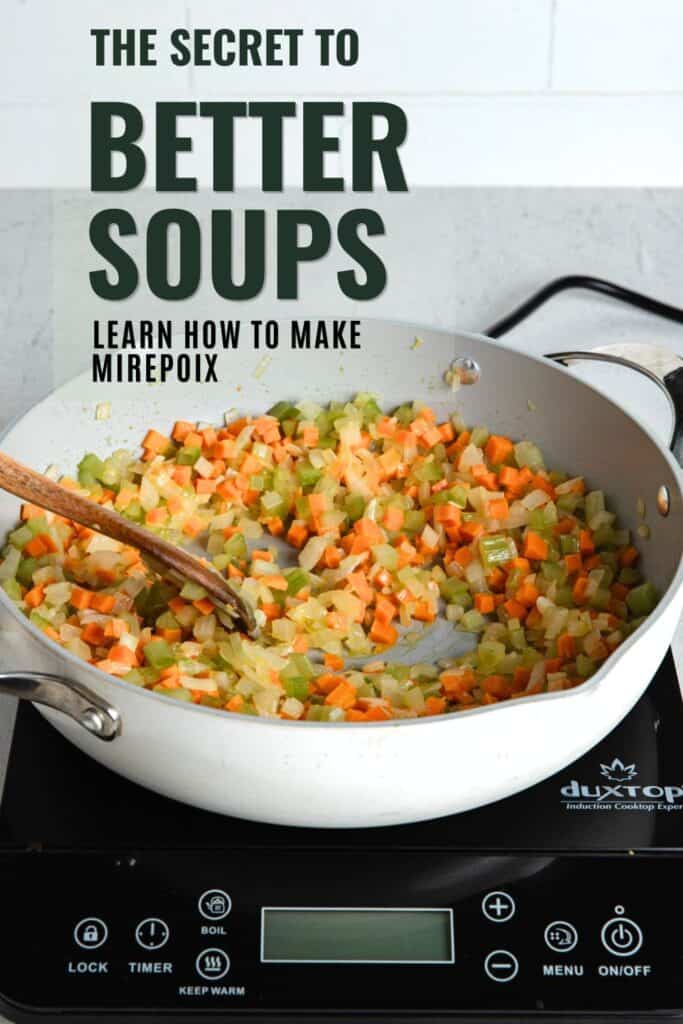
Heat 1 tablespoon of oil or butter in a pan over medium-low heat. Add the mirepoix and cook for 8-10 minutes, stirring occasionally, until the onion turns translucent and everything softens.
Step 3. Watch for color.
This is the step most people get wrong when sweating mirepoix. If you see browning, your heat is too high. Pull the pan back and finish at a lower temperature. Browning means you've crossed from sweating into sautéing, which changes the flavor you're building toward.
If you're roasting mirepoix instead, for a veal stock or braised short ribs, color is the goal, not the mistake. That's a different technique with a different result, covered above.
Mirepoix Variations
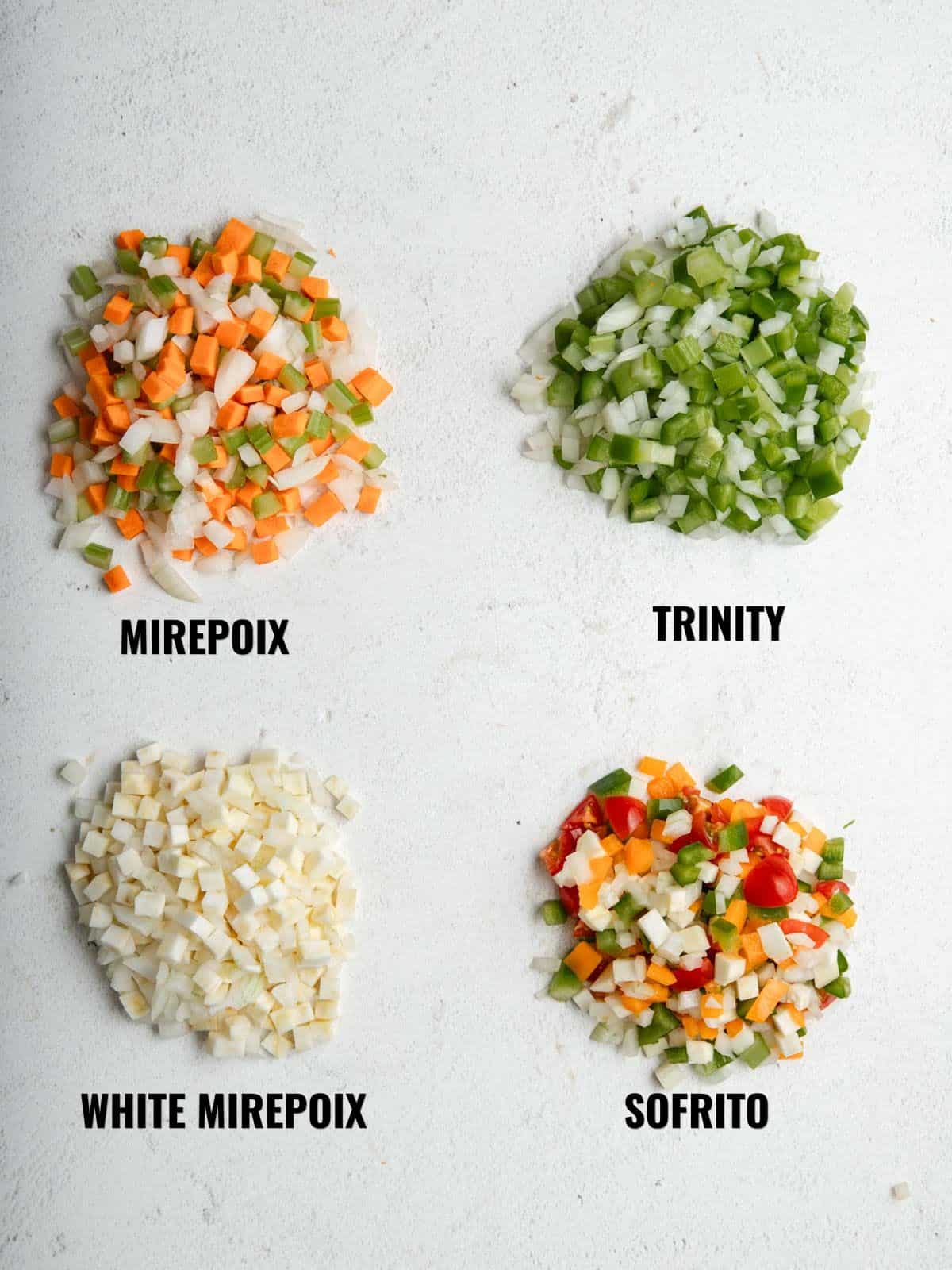
- Classic Mirepoix - Combination of 2 parts onion, 1 part carrots, and 1 part celery.
- Holy Trinity - In Cajun and Creole cooking, the "Holy Trinity" is the foundation used for gumbo, jambalaya, and étouffée. It consists of 2 parts yellow onion, 1 part celery, and 1 part green bell pepper.
- White Mirepox - Is a French aromatic flavor base for light stocks like my White Chicken Stock, soups, and sauces. Consisting of white onions or leeks, celery or celery root, and parsnips.
- Soffritto - A flavor base found across Spanish, Cuban, and Puerto Rican cooking, made by slowly cooking aromatics in oil until soft, never browned. The ingredients shift by region, onion, garlic, and bell pepper are common, with tomatoes and cilantro added depending on the tradition. Used as the foundation for rice dishes, beans, and stews.
How To Use Mirepoix
- Stocks - Large diced mirepoix simmers for hours, then gets strained out before the stock is finished.
- Soups and braises - Medium diced mirepoix is found in my Dairy Free Clam Chowder, and braises like my short ribs or salmon stew.
- Pan sauces and gravies - Finely diced mirepoix cooks quickly in sauces like a classic Velouté Sauce, which gets its body from a roux thickening the mirepoix-based stock.
- Rice pilaf - Adds aromatic flavor before the rice goes in.
- Mains - Mirepoix is the base for many main dishes like in my Bolognese Ragu recipe.
Chef Tips
- Measure 50% onions, 25% carrots, and 25% celery by weight.
- Depending on the recipe, the size of your cut mirepoix will differ.
- Cut onions, carrots, and celery uniform in size so they cook evenly.
FAQ's
Yes, I like to cook a large batch and portion them in silicone ice cube trays or vacuum seal and freeze for 1-3 months. 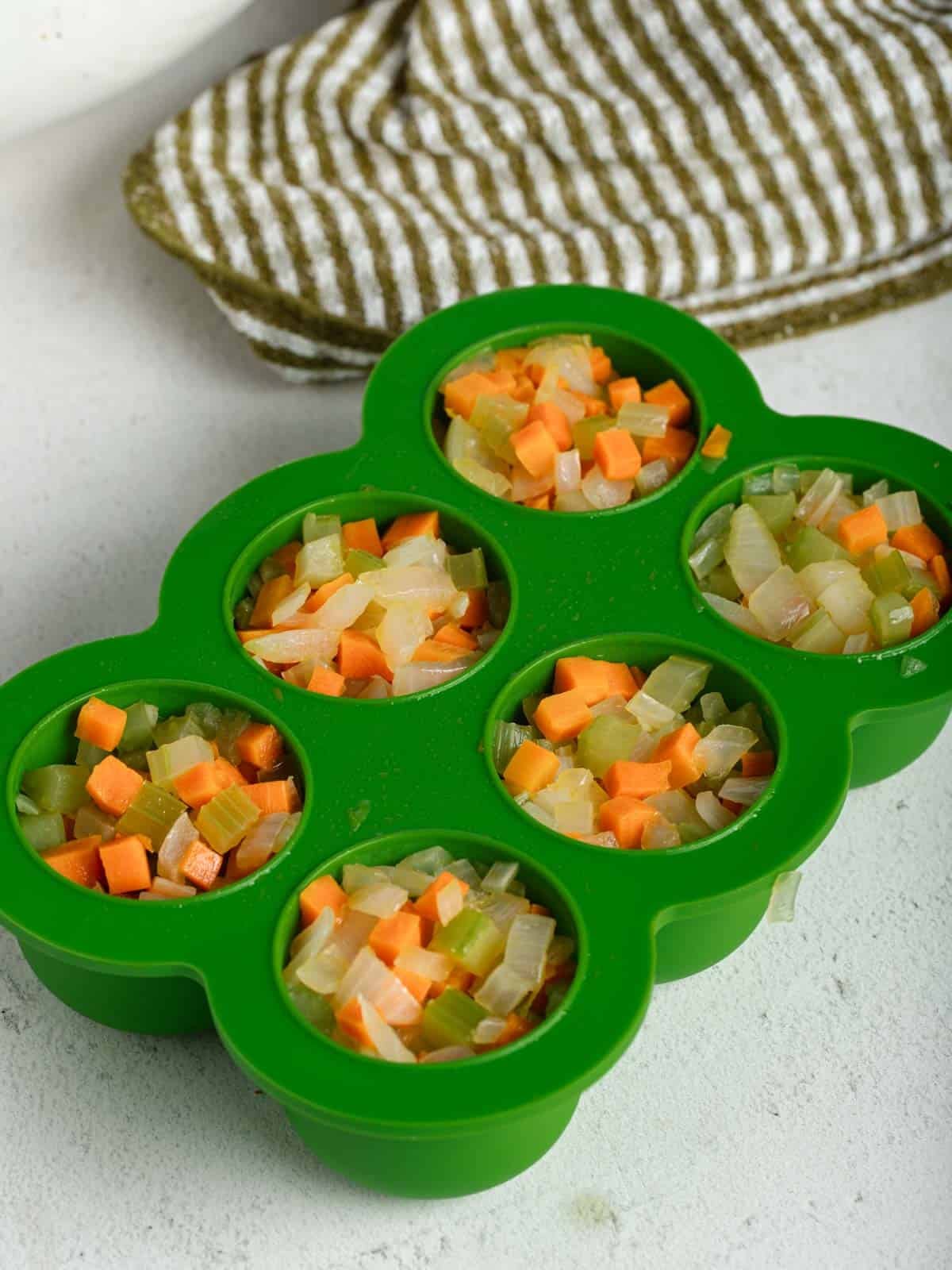
Yes, mirepoix is a classic French cooking term. It refers to a aromatic base of diced vegetables, traditionally onions, carrots, and celery, that are gently cooked in fat (usually butter) to create a foundation for soups, stews, stocks, and sauces.
The holy trinity is found in cajun and creole cooking and replaces carrots with green bell peppers.
What to make with Mirepoix



📖 Recipe
Mirepoix Recipe
Ingredients
- 8 ounces (225 g) yellow onion, diced about 2 medium onions
- 4 ounces (115 g) carrots, diced about 2 medium carrots
- 4 ounces (115 g) celery, diced about 2 ribs of celery
- 1 tablespoon unsalted butter or olive oil
Instructions
- Dice the onion, carrot, and celery into uniform pieces.
- Melt the butter or heat the olive oil in a large skillet or saucepan over medium-low heat.
- Add the vegetables and cook for 8 to 10 minutes, stirring occasionally, until the onions become translucent and the carrots and celery soften.
- Use immediately in stocks, soups, sauces, braises, rice pilaf, or freeze for later use.
Notes
- Measure the vegetables by weight, not by volume, for the most accurate 2:1:1 ratio.
- Keep the dice uniform so the vegetables cook evenly.
- Sweating develops sweetness without adding roasted flavors.
- For roasted stocks or braises, caramelizing the mirepoix is intentional and creates a deeper, richer flavor.
- Refrigerator: Store uncooked or cooked mirepoix in an airtight container for up to 4 days.
- Freezer: Freeze in freezer-safe bags for up to 3 months. Thaw overnight in the refrigerator or add directly to soups, stocks, and braises.

Mike Cleavenger says
A mirepoix is a foundational skill in French cuisine.