

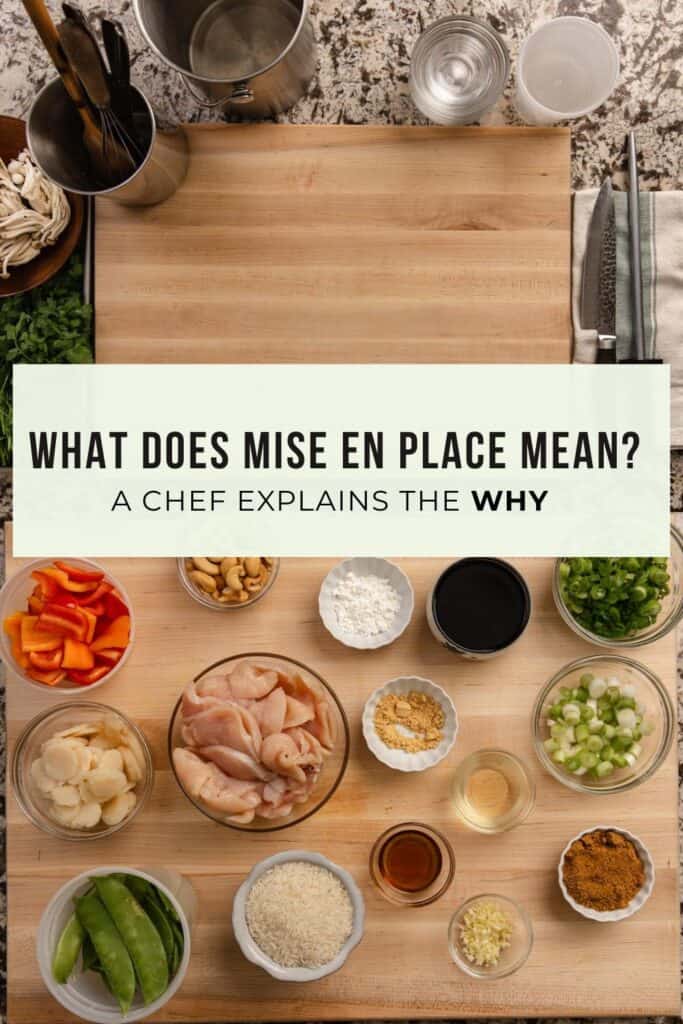
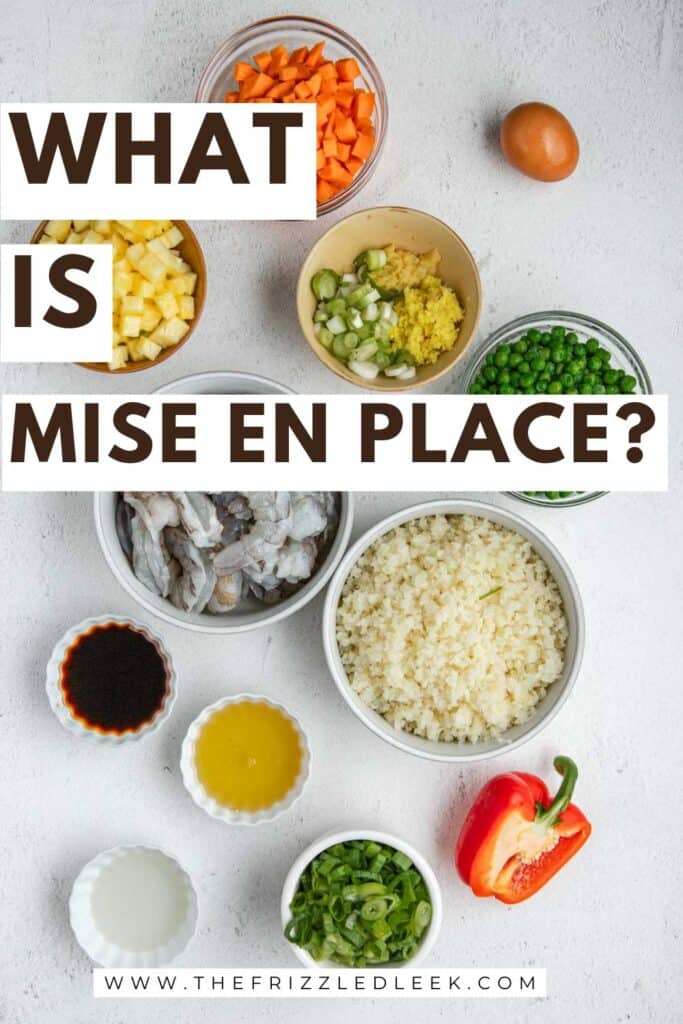
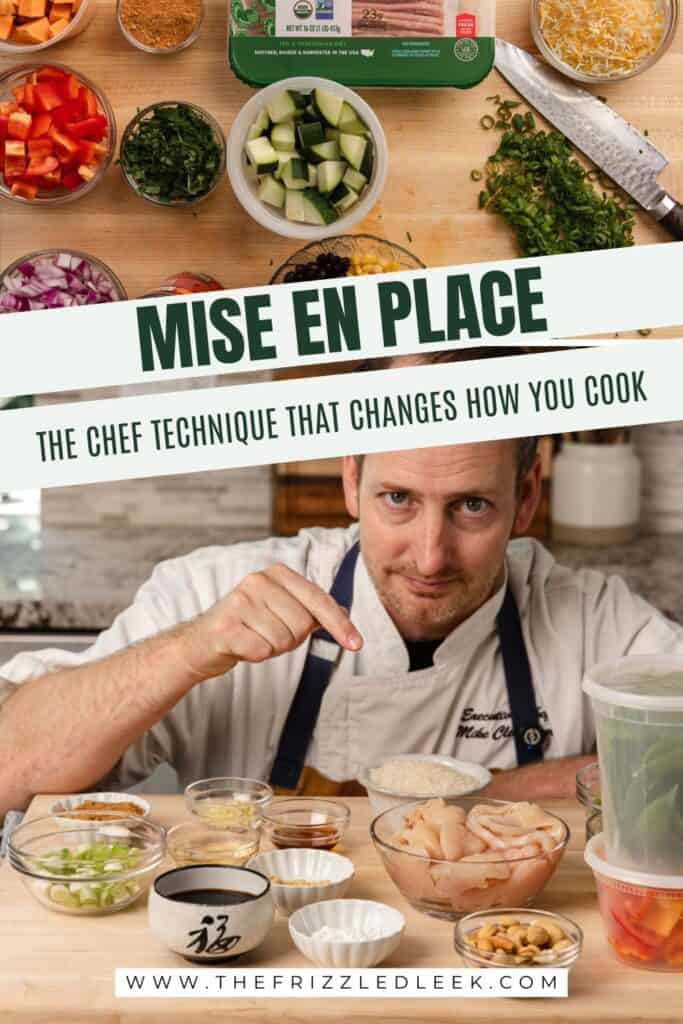
Mise en place is the professional kitchen system every home cook needs. Learn the 5-step process used by real chefs to prep faster, cook cleaner, and never miss a step.
Jump to:
What is Mise En Place?
Mise en place ("MEEZ-on-plahs") is a French culinary term that simply means "put in place." Whether you're a professionally trained chef or a talented home cook, this fundamental will change the way you work in the kitchen.
In a professional kitchen, success begins before the first pan hits the stove. Mise en place is the system that keeps everything organized, intentional, and ready to execute. When service starts, there's no time to scramble.
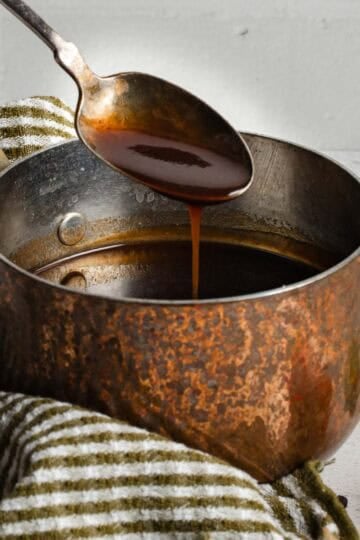
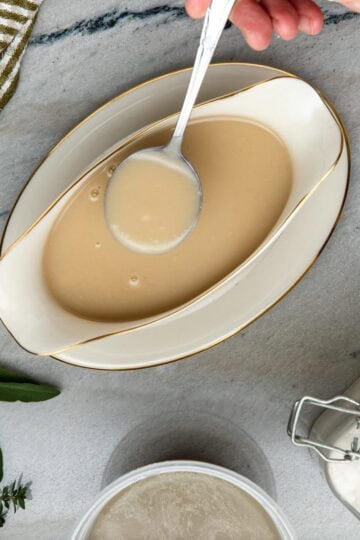
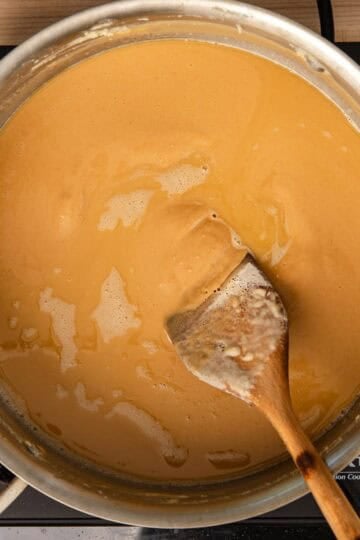
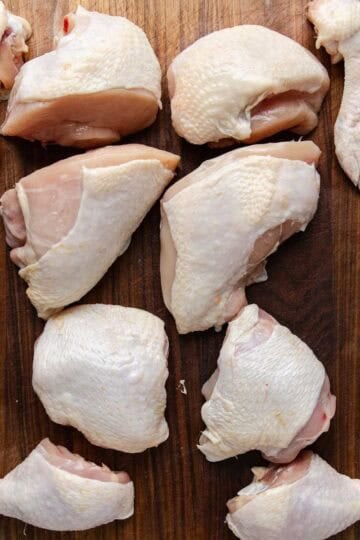
That prep work includes pasta production, washing and cutting produce, cooking beans, portioning fish, making a roux, clarifying butter, and building homemade stocks and sauces like roasted chicken stock and velouté sauce.
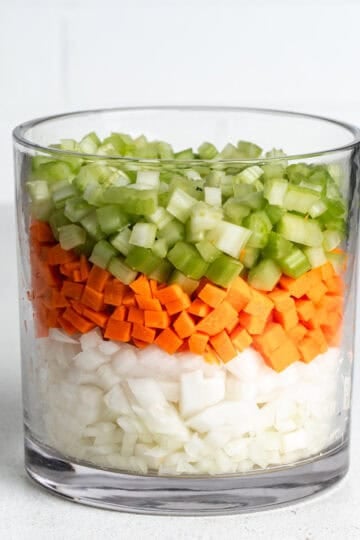
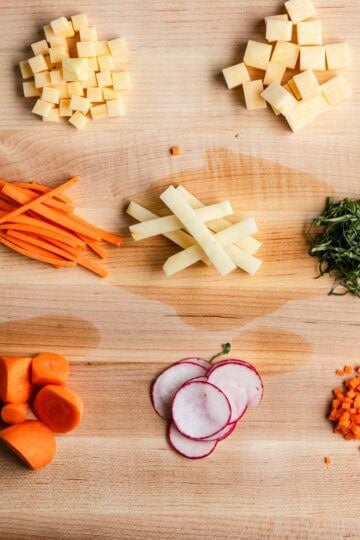
Chef's Tip: Professional kitchens often prepare ingredients like mirepoix before service. Having vegetables already washed, peeled, diced, and portioned allows you to focus on cooking instead of rushing to prep ingredients.
Watch How to use Mise En Place in the Kitchen
The 5 Steps Every Chef Should Follow
- Read the recipe all the way through. Before you touch a single ingredient, read the entire recipe from start to finish. This is the mental mise en place, and it gives you the full picture of what you're about to cook, highlights any steps that need advance prep, and eliminates surprises.
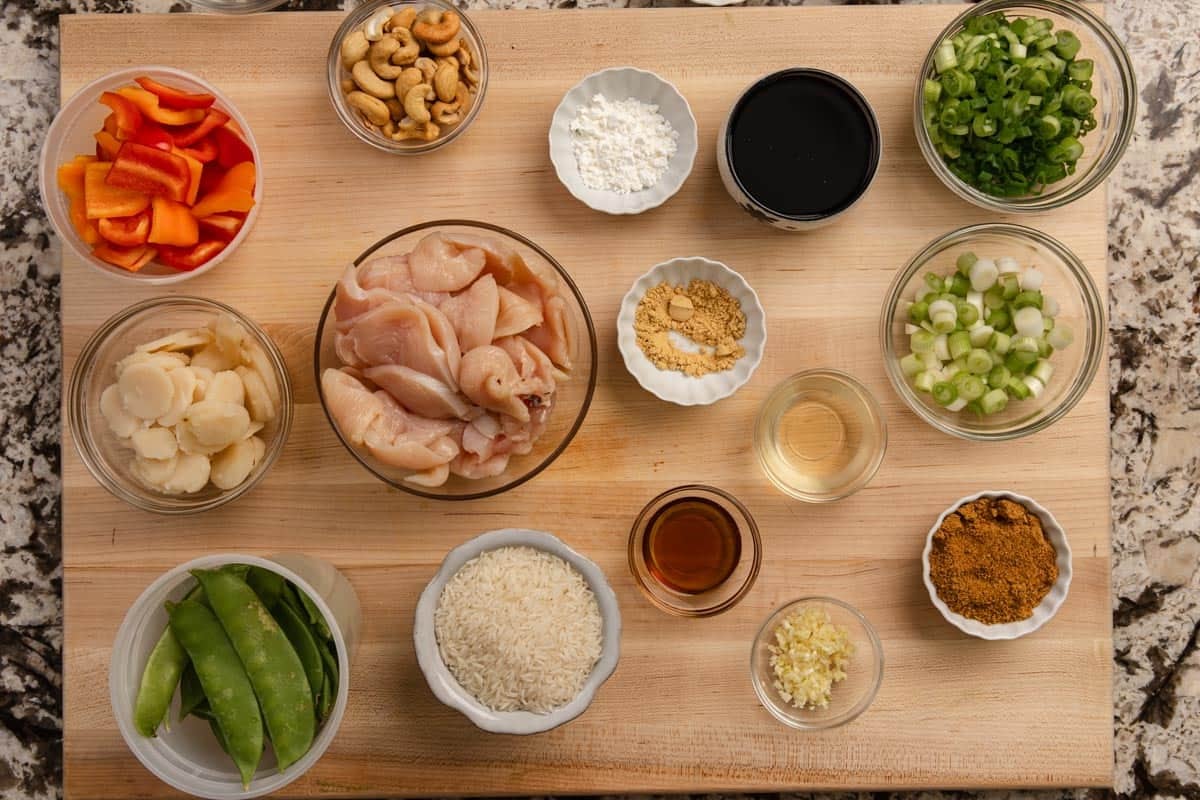
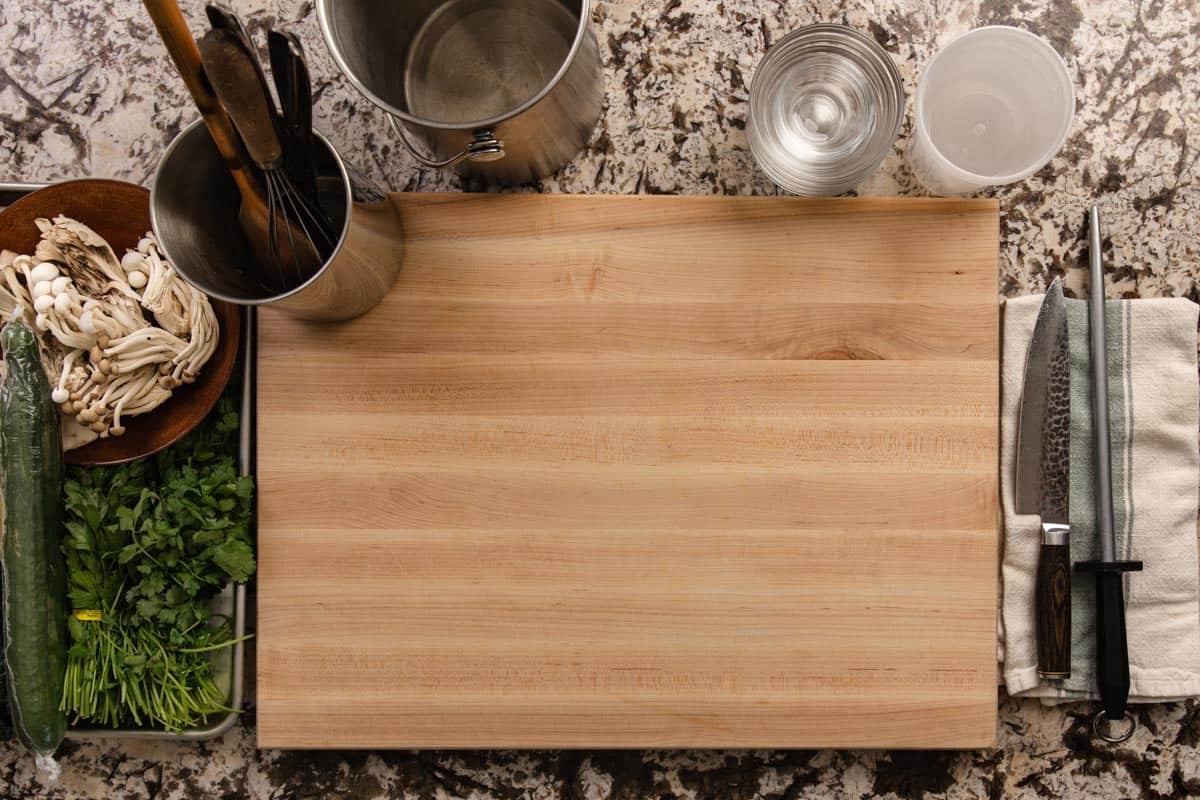
- Set up your station and gather tools. This looks like a cutting board, knife and honing rod, a Bain Marie to place your kitchen tools in, food waste bin, sanitizer bucket, and prep bowls and containers to portion ingredients into. If you are still working on your basic knife skills, now is the time to sharpen both.
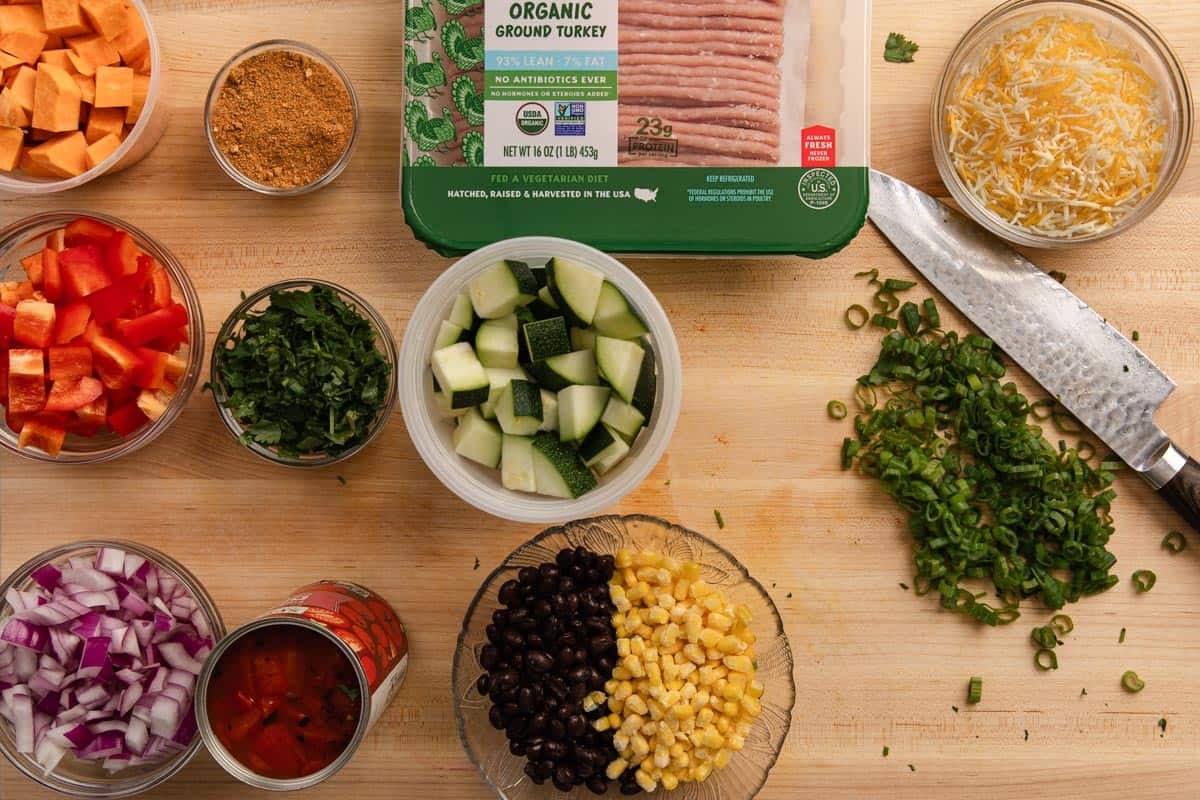
- Prep and measure ingredients into individual bowls. Some recipes require you to measure liquids in a measuring cup or weigh items on a digital scale. I like to use glass prep bowls and deli containers to keep my prep work organized.
- Cook. This is where mise en place pays off. Everything is staged, your station is set, and your only job now is to cook.
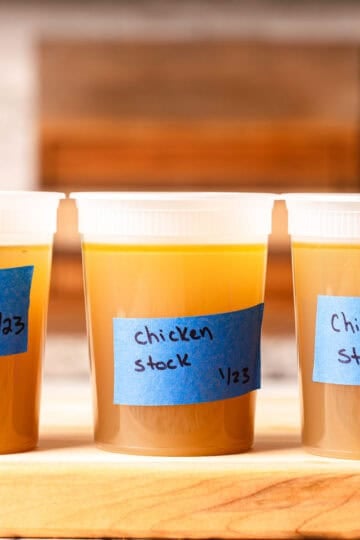
- Label, date, and store. In a professional kitchen mise en place can be done a day or hours before serve so it's important to label the ingredients with the date, and initial it. For home kitchens this is only the case if you are prepping for a large party or meal prepping for the week.
Save This Recipe!
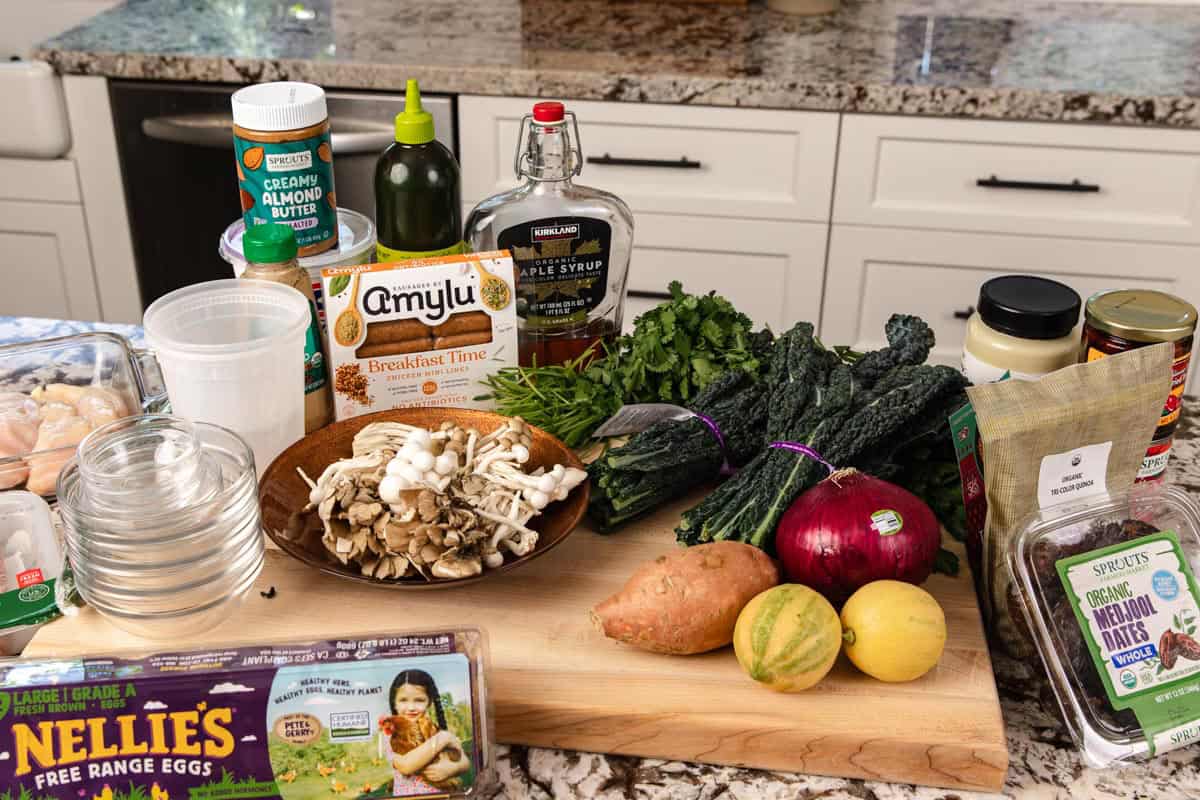
Why It Makes You a Better Cook
Mise en place makes you a better cook because it eliminates reactive cooking. Reactive cooking is what happens when you're chopping onions while your pan is overheating, or you realize halfway through making your Red Wine Braised Short Ribs that you forgot to measure your stock.
When everything is prepped, measured, and staged before the heat goes on, you shift from stressed to calm. That's how a line cook fires 200 covers on a Saturday night and the same skill applies to cooking dinner on a Tuesday night at home.
The system also builds kitchen confidence. When you know your station is set and your ingredients are ready, you cook with less anxiety. That's the difference between following a recipe and actually cooking.
Common Mistakes To Avoid
- Not reading through the recipe first - this is where mistakes happen and you miss a step in the recipe.
- Prepping out of order - starting with the wrong ingredient first. Long cook-time items like stocks, braises, and roasted vegetables should always be started before your quick-prep ingredients.
- Messy station - if equipment and ingredients are scattered everywhere it's hard to cook in an organized way. Station mise en place means you keep your knife, prep bowls, ingredients, and equipment in the same place.
- Prepping too far in advance - some ingredients like freshly cut herbs, avocado, breading, and blanching need to be done closer to the cook time so they stay fresh.

Comments
No Comments