

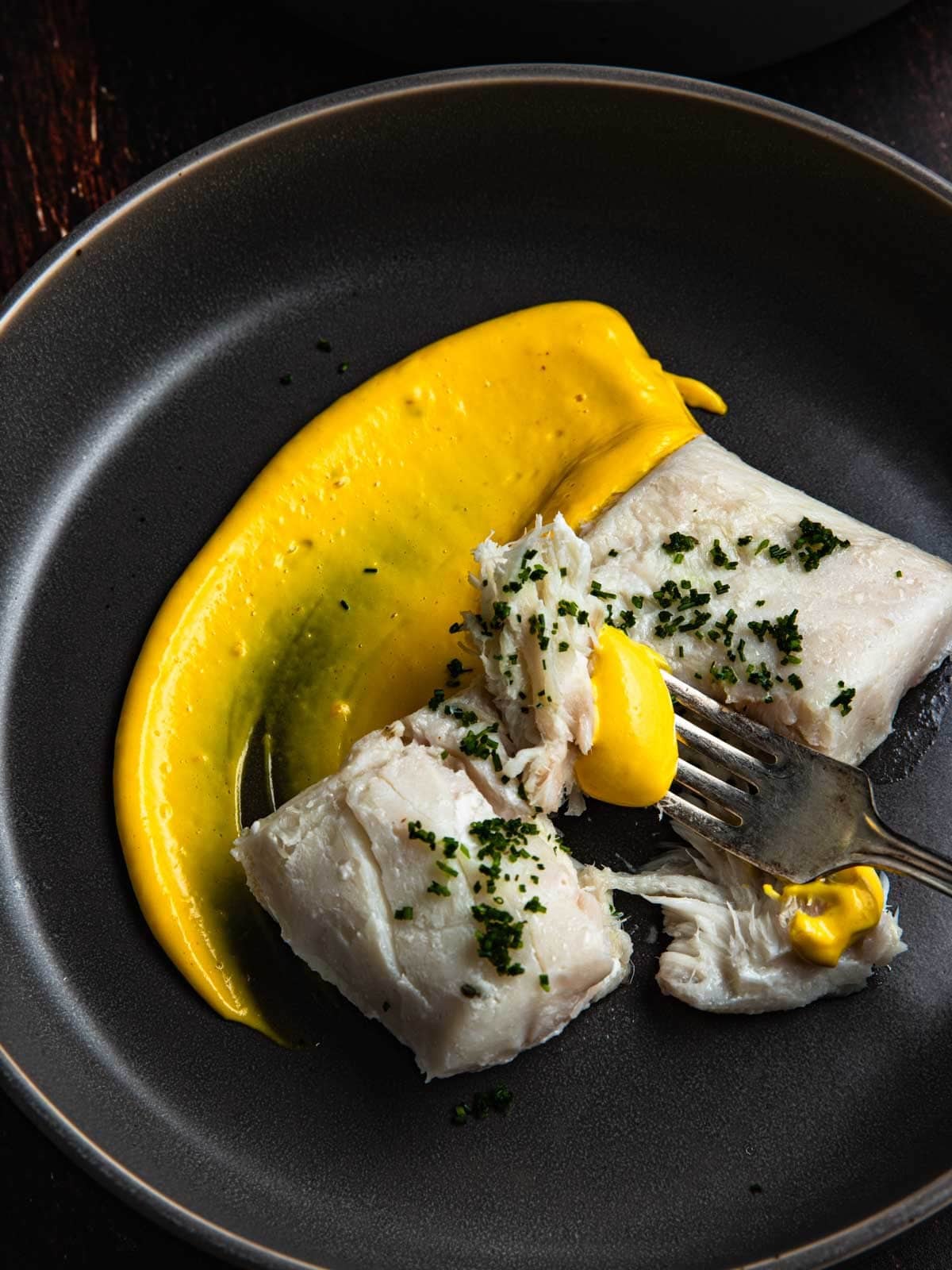
This Sous Vide Halibut is tender, buttery, and restaurant-worthy without the $50 price tag. Let's face it, halibut is often sad and overcooked, but this method guarantees a moist and flaky fish every time!
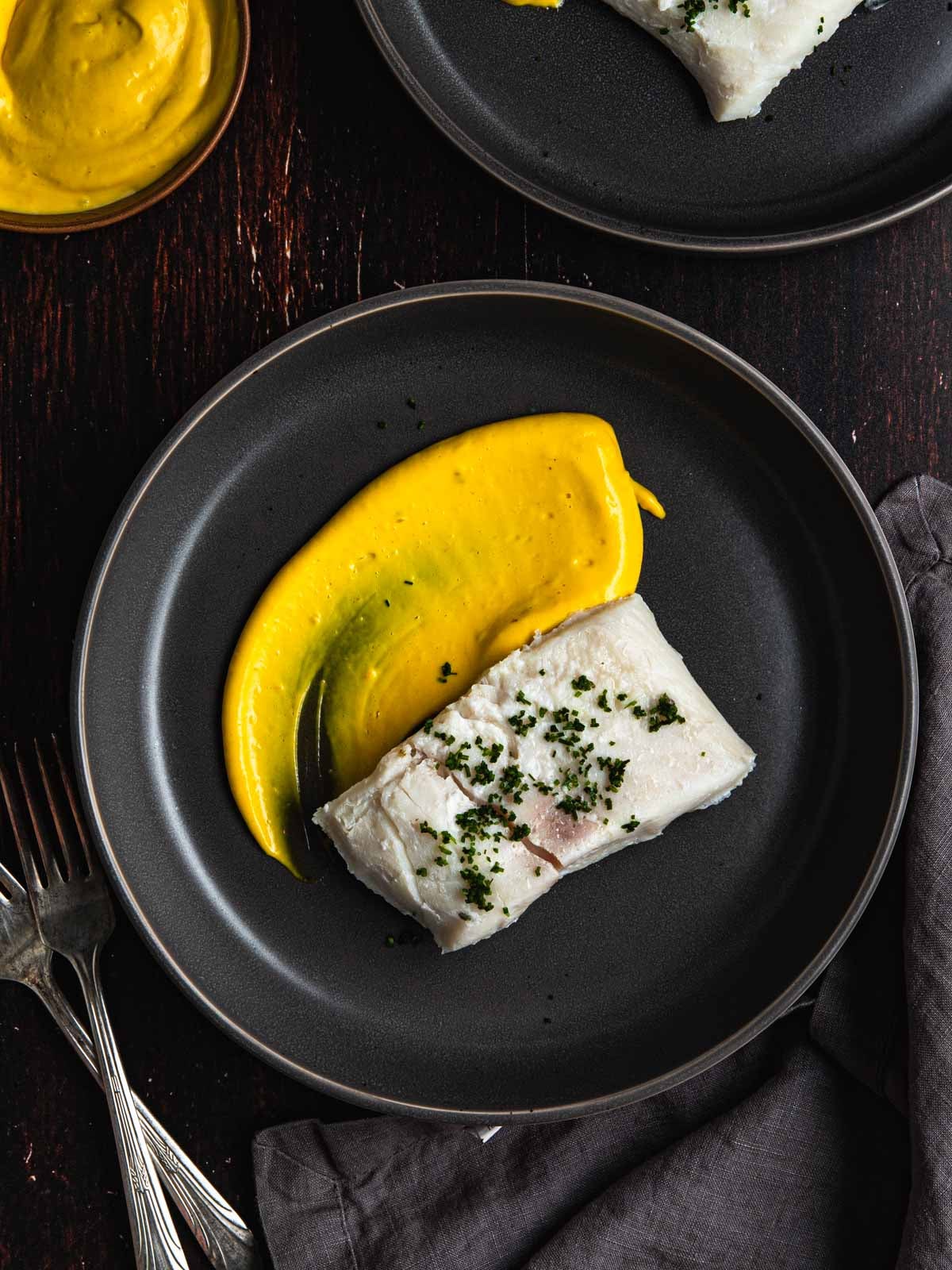
Halibut is delicious, but it's also the diva of the seafood world. Overcook it by just 30 seconds, and it turns dry, tough, and disappointing.
Most restaurants pan-sear halibut, a feat that can challenge even the finest chefs.
That's where sous vide comes in to save the day! By gently cooking halibut in a temperature-controlled bath, you'll get fillets that are buttery, moist, and perfectly cooked every time.
Serve it over lemon risotto or tomato orzo pasta, and don't forget the Saffron Aioli (recipe below).
Looking for more ways to prepare this lean white fish? Then try my Air Fryer Halibut, it's served with a flavor-packed chimichurri sauce.
Calling all fish lovers! You've got to try my Horseradish Crusted Salmon, and Oven Baked Salmon in Foil.
Jump to:
Why You'll Love This Recipe
- No more dry fish - Sous vide cooks halibut to the perfect temperature.
- Show-off-worthy - Dinner guests will think you are a professionally trained chef.
- Versatile & Elegant - Serve it with risotto, pasta, or a parsnip gratin.
- Saffron Aioli - A swoosh of this floral and vibrant sauce is stunning and delicious!
WHAT IS SOUS VIDE?
Sous vide is a cooking method that utilizes an immersion circulator, also known as a sous vide machine. This device circulates water in a temperature-controlled bath, ensuring your food is always cooked perfectly.
To learn more about sous vide cooking, head over and read What is Sous Vide Cooking.
WHAT IS THE WATER DISPLACEMENT METHOD?
The displacement method involves slowly submerging a ziplock bag in water, which pushes the air out through the slightly open top of the bag.
Use a clip (I prefer sous vide magnets) to attach the bag to the side, preventing it from floating and letting air or water inside.
EQUIPMENT USED
- Anova Precision Sous Vide Cooker
- EVERIE 12 quart container
- FoodSaver vacuum sealer machine
- Vacuum sealed bags
Recipe Ingredients
You'll need these simple ingredients to Sous Vide a Halibut:
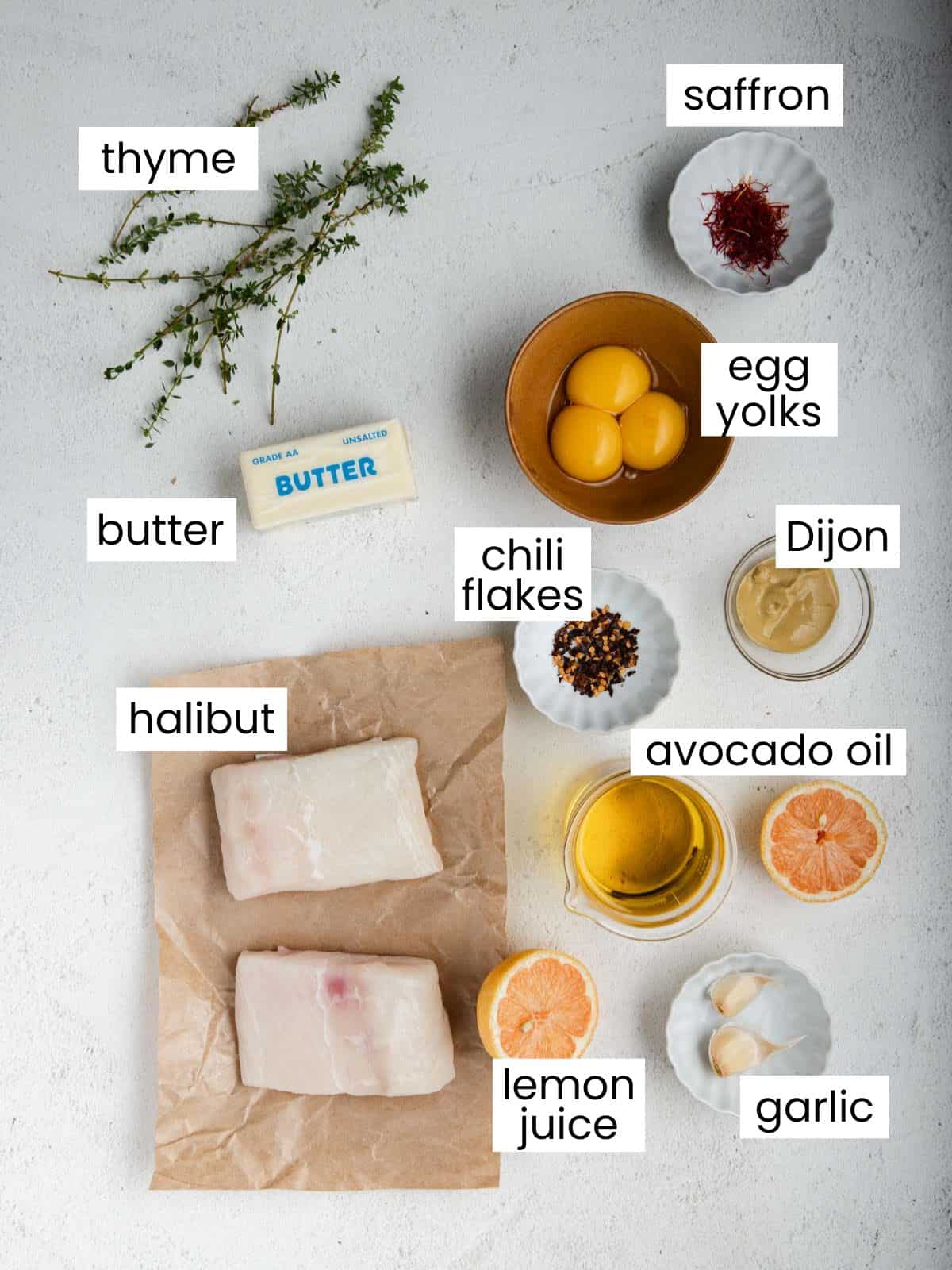
- Halibut - Is notorious for being overcooked, and Sous Vide cooking eliminates that from happening. The result is a perfectly cooked, tender, and flaky fillet of halibut. A quick cure of salt and sugar firms up the flesh and seasons the fish.
- Butter - Adding a pat of butter will baste the halibut while it cooks. With such a lean fish, you'll need to add some fat to the sous vide bag.
- Fresh Thyme - Pairs perfectly with the halibut's mild flavor; you can also use herbs like parsley and tarragon.
Saffron Aioli Ingredients
- Saffron - Just a pinch of these saffron threads gives the aioli a vibrant color. Because saffron is expensive, it's best to extract the flavor through a reduction.
- Egg Yolks - Are a natural emulsifier and give the aioli that creamy texture.
- Dijon - For a slight tang, and helps with the emulsifying process.
- Lemon Juice - Use only fresh-squeezed lemons for a bright and zippy flavor.
- Garlic - No aioli would be complete without fresh garlic.
- Oil - I used a blend of 50% Extra Virgin Olive Oil and Avocado Oil.
See recipe card below for a full list of ingredients and measurements.
Substitutions & Variations
- Fish options - Can't find halibut? Swap in another lean cod, sea bass, or mahi-mahi.
- Butter alternatives - For a lighter touch, use Extra Virgin Olive Oil instead of butter. It'll give the fish a fruitier flavor. Ghee or clarified butter will also work, and they don't include any milk solids.
- Sauce variations - Not into a saffron aioli? Try a lemon buerre-blanc, chimichuri sauce, or even a Spicy Mango Salsa.
- Sous Vide Temperature - At 130°F (54°C), you'll get a moist, tender halibut.
Sous Vide Temperature Guide
| Temperature | Texture | Notes |
| 122°F (50°C) | Very tender, delicate, and slightly rare | Great if you like soft and almost silky. |
| 130°F (54°C) | ✅ Tender, moist, and perfectly flaky | Our favorite! The sweet spot for texture and flavor. |
| 140°F (60°C) | Firm, traditional, and fully flaky | It can be a little dry, so pair it with a sauce. |
Save This Recipe!
How To Make Sous Vide Halibut
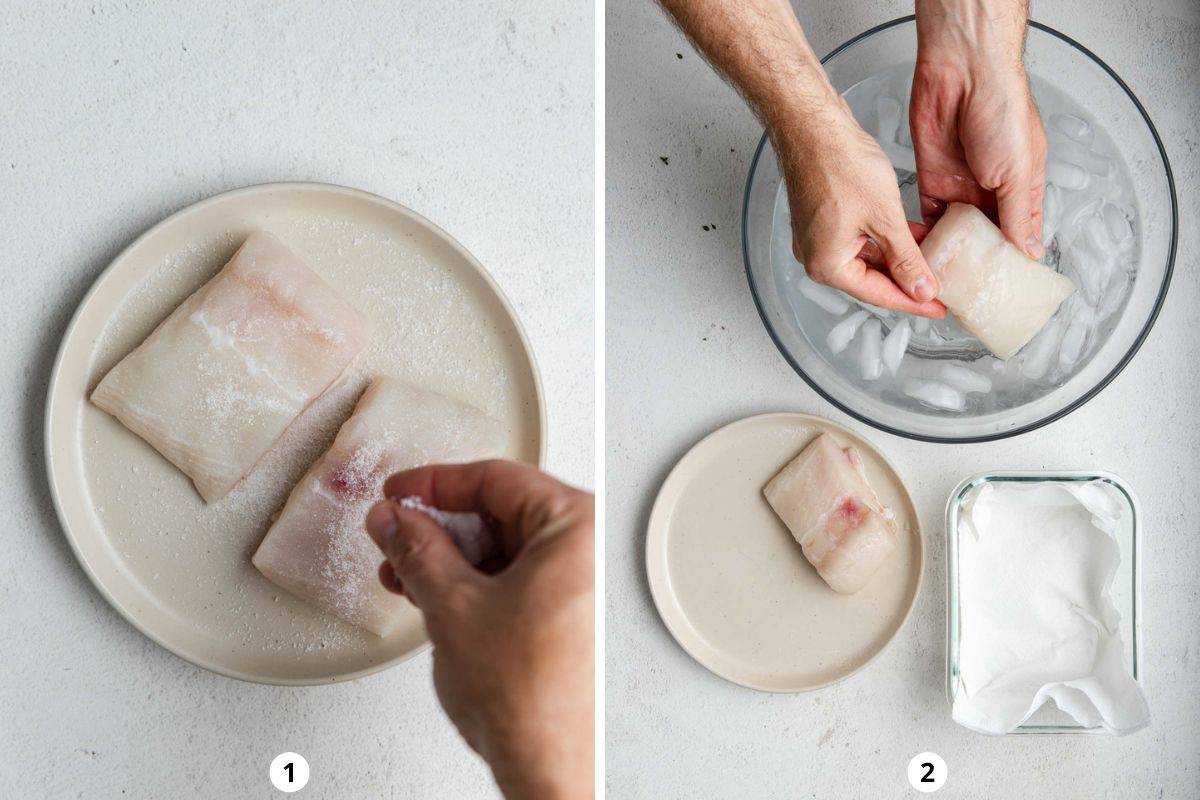
Step 1 & 2: Quick Cure the Halibut
- Mix the cure - Mix equal parts salt and sugar (1 tablespoon salt and 1 tablespoon sugar).
- Coat the fish - Sprinkle the mixture over both sides of the halibut fillets. This firms up the flesh and seasons it.
- Rest - Let the halibut rest for 15 minutes at room temperature.
- Ice bath - Rinse the filets in a bowl of ice water to stop the curing process. Pat dry with paper towels.
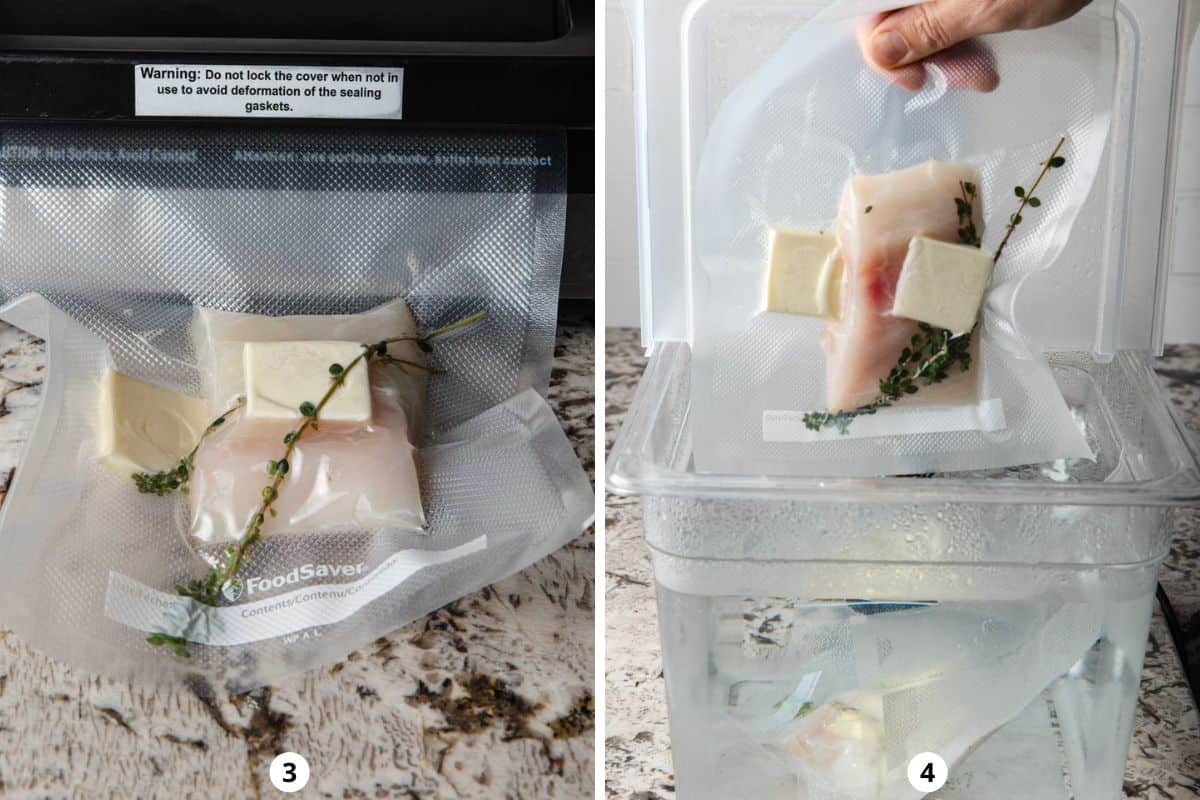
Step 3: Vacuum Seal
- Place each fillet into a vacuum-sealable bag (or use a heavy-duty freezer bag with the water displacement method).
- Add a cube of butter and a few sprigs of fresh thyme into each bag.
- Vacuum seal until airtight.
Step 4: Cook Sous Vide
- Preheat your water bath to 130°F (54°C).
- Lower the sealed halibut bags into the water bath and cook for 45 minutes.
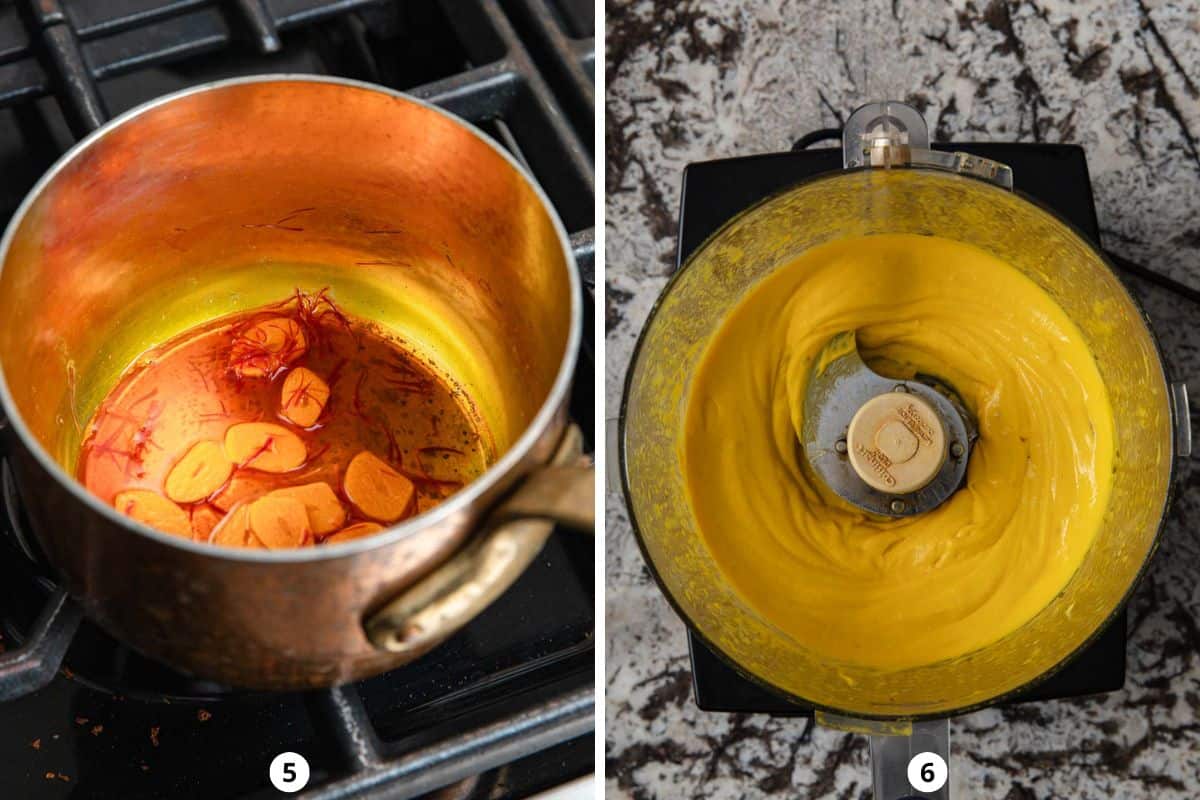
Step 5: Make the Saffron Reduction
- In a small saucepan, combine water, sliced garlic, and saffron threads.
- Bring to a gentle simmer, and cook until there are 2 tablespoons of liquid left.
- Remove from heat and allow to cool for 5 minutes.
Step 6: Make the Saffron Aioli
- In a food processor, blend together egg yolks, Dijon mustard, chili flakes, and lemon juice.
- Add in the saffron reduction, including the sliced garlic and saffron threads.
- While the food processor is running, slowly drizzle in the oil until the mixture thickens into a creamy aioli.
- Season to taste with salt and pepper.
Step 7: Finishing Touches
- Carefully remove halibut from bags onto a paper-towel-lined plate. (It'll be delicate, handle gently!)
- To serve, place the sous vide halibut on a plate with a generous swoosh of the saffron aioli. Enjoy!
Expert Tips
- Don't skip the cure - By quickly curing the fish, you firm up the flesh and season it properly.
- Ice bath - I like to use the ice bath to wash away the cure and firm up the fish even more. If you don't rinse away the cure, the halibut will taste salty.
- Temperature control - 130°F (54°C) is the sweet spot for moist, flaky halibut.
- Handle with care - Halibut will be fall-apart tender once cooked. Open the bag and slide it out onto a plate, and pat dry with a paper towel.
- Seal them individually - I like to seal each halibut fillet individually so they don't stick together and fall apart.
Recipe FAQ's
Yes! You can sous vide halibut straight from frozen. Just add about 30 extra minutes (so 75 minutes total at 130°F). Skip the cure step if starting frozen because the salt won't penetrate the fish.
It depends on your preferred texture; we found that 130°F (54°C) is the sweet spot for halibut. If you like a softer and more rare texture, you can drop the temperature to 122°F. For a firmer halibut, increase the temperature to 140°F. Just note that the halibut may end up on the dry side.
Not technically, but we highly recommend it. The quick cure improves texture, firms up the fish, and seasons it beautifully. If you skip it, the halibut will be underseasoned and bland.
Not at all. Halibut is delicate and delicious straight out of the bag. If you want a touch of color, give it a quick sear (10-15 seconds per side) in a non-stick skillet with some butter.
It only takes 45 minutes to sous vide halibut, but you might want to increase the time to 60 minutes if you have a thick halibut filet.
Storage
For the best taste and texture, enjoy halibut as soon as it is cooked.
If you have leftovers, store them in an airtight container and refrigerate for 3-4 days.
To reheat, place halibut filets in a bamboo steamer basket over a pot of boiling water. Gently steam for 5 minutes or until halibut is heated through.
What to Serve With Sous Vide Halibut
- Boursin Mashed Potatoes
- Air Fryer Smashed Brussels Sprouts
- Sous Vide Beets
- Frizzled Leeks
- Air Fryer Sweet Potato Cubes
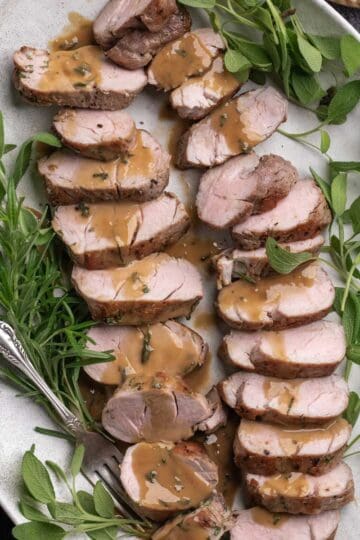
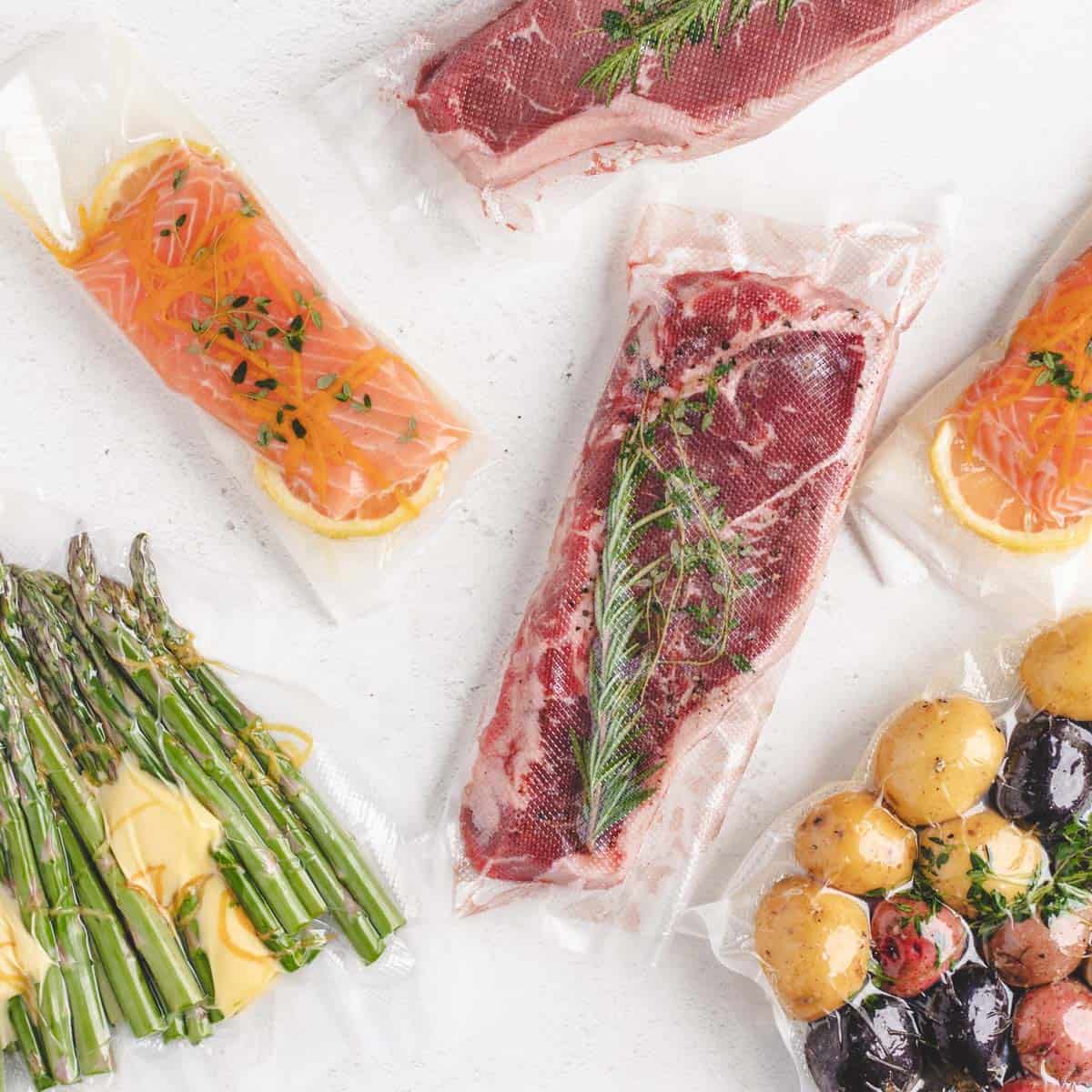
More Sous Vide Recipes
If you tried this Halibut recipe or any other sous vide recipes on my website, please leave a 🌟 star rating and let me know how it went in the 📝 comments below. I love hearing from you!
📖 Recipe

Sous Vide Halibut
Equipment
- Sous Vide Cooker
- Sous Vide Container
- Vacuum Sealer
Ingredients
Quick Cure
- 1 tablespoon kosher salt
- 1 tablespoon sugar
Sous Vide Halibut
- 4 6-ounce halibut fillets (170g per fillet)
- 4 sprigs of thyme
- 4 tablespoons unsalted butter (58g)
Saffron Aioli
- 1 cup water (237mL)
- 1 pinch saffron (0.5 grams)or 1 teaspoon
- 2 cloves of garlic sliced
- 3 large egg yolks
- 1 tablespoon Dijon mustard
- ½ lemon squeezed
- ½ teaspoon chili flakes
- ½ cup vegetable oil (118mL)
- ½ cup Extra Virgin Olive Oil (118mL)
- salt and pepper to taste
Instructions
Quick Cure
- Mix 1 tablespoon salt and 1 tablespoon sugar, coat both sides of the halibut, let rest for 15 minutes, then rinse in ice water and pat dry.
Sous Vide Halibut
- Preheat your sous vide water bath to 130°F (54°C).
- Place each fillet into a vacuum-sealable bag (or use a heavy-duty freezer bag with the water displacement method) with a pat of butter and thyme, then seal airtight.
- Lower the sealed halibut bags into the water bath and cook for 45 minutes.
- Carefully remove halibut from bags onto a paper-towel lined plate. (It'll be delicate, handle gently!)
- To serve, place the sous vide halibut on a plate with a generous swoosh of the saffron aioli. Enjoy!
Saffron Aioli
- In a small saucepan, combine water, sliced garlic, and saffron, simmer until reduce to 2 tablespoons, then remove from the heat and let cool for 5 minutes.
- In a food processor, blend egg yolks, Dijon mustard, lemon juice, chili flakes, and saffron reduction, then slowly drizzle in oil until thick and creamy, season with salt and pepper.
Notes
- Don't skip the cure - By quickly curing the fish, you firm up the flesh and season it properly.
- Temperature control - 130°F (54°C) is the sweet spot for moist, flaky halibut.
- Handle with care - Halibut will be fall-apart tender once cooked. Open the bag and slide it out onto a plate, and pat dry with a paper towel.

Mike Cleavenger says
This Sous Vide Halibut is cooked perfect every time, and the saffron aioli is delicious.