

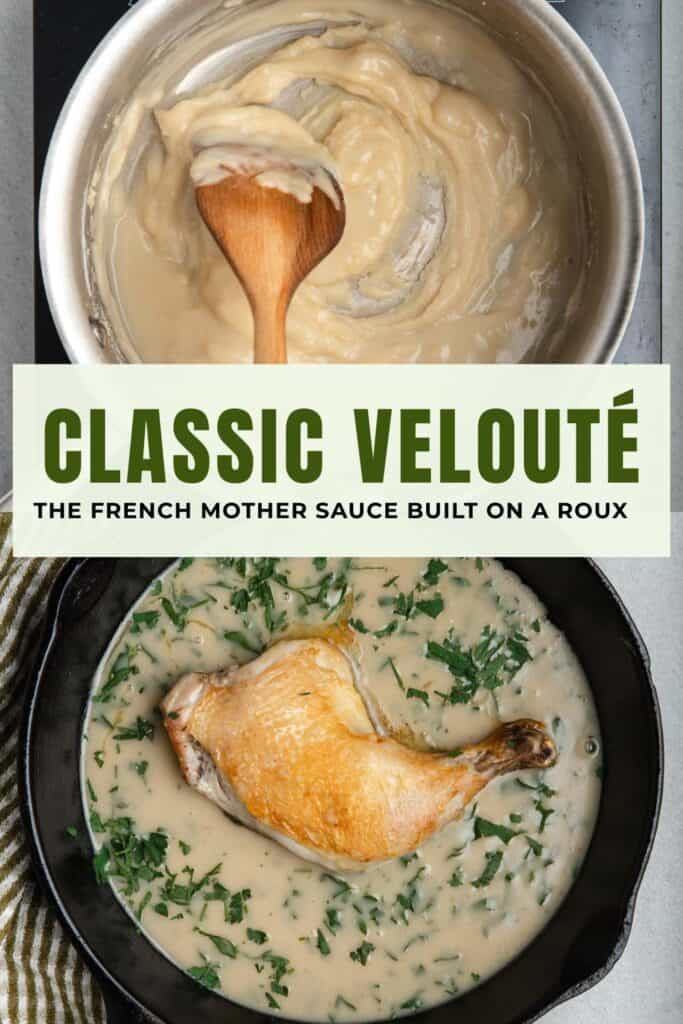
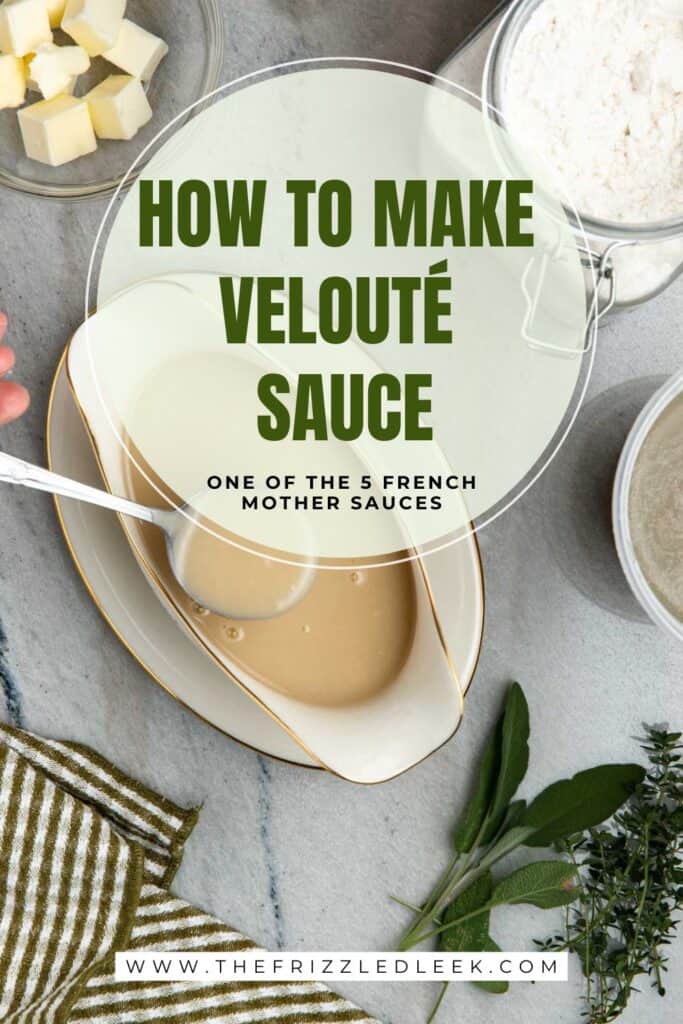
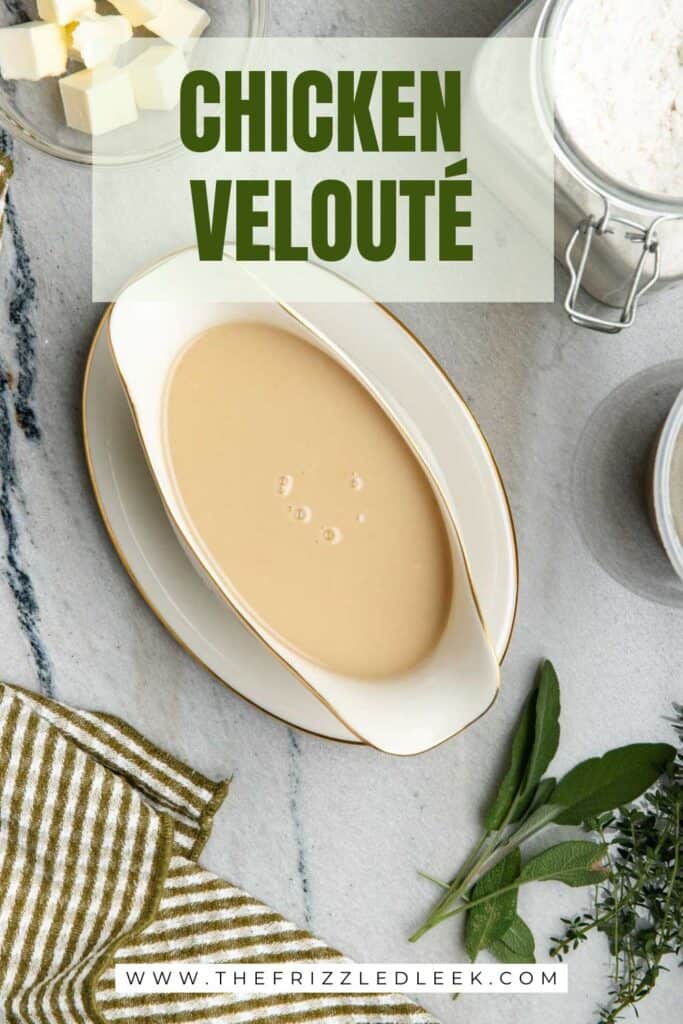
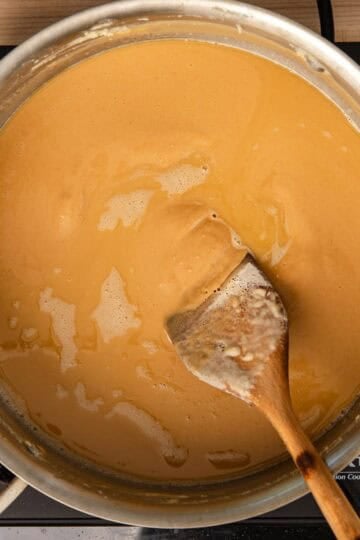
A Velouté Sauce (pronounced veh-loo-TAY) is a blond roux thickened with a white stock - most commonly chicken. The result should be pale golden, velvety, and clean-tasting sauce that will coat the back of a spoon. What most recipes won't tell you is that the difference between a great velouté and a mediocre one comes down to three things: your roux, your stock, and your patience.
Quick Look: Velouté Sauce
- 🧁 Serves: 2 cups
- ⭐ Features: Pale ✓ Golden ✓ Velvety
- ⌛️ Prep Time: 5 minutes
- 🍪 Cook Time: 25 minutes
- 🕑 Total Time: 30 minutes
- 👩🍳 Skill Level: Beginner to Intermediate
- 🏆 Why make THIS version? It LOOKS difficult and will make an impression. This is the kind of sauce that makes an impression!
SUMMARIZE AND SAVE THIS POST ON
🧑🏼🍳 Chef Tip
Velouté sauce first appeared in print in Marie-Antoine Carême's 19th-century cookbook. Escoffier later codified it as one of the five mother sauces in his 1903 Le Guide Culinaire - the culinary bible still referenced in professional kitchens today.
What Is Velouté Sauce
Velouté translates from French as velvety. It is one of Auguste Escoffier's five French mother sauces, alongside Béchamel, Espagnole, Hollandaise, and Sauce Tomat. Mother sauces are the foundation to French Cooking. Master it, and soon you'll be making dozens of daughter sauces.
Velouté is made from a blond roux and white stock. That's it. The technique is simple. The execution is where most home cooks either nail it or fall short - and that's exactly what we're going to fix today.
Velouté Sauce: Recipe Video
Velouté vs. Béchamel
Béchamel uses milk as its liquid. Velouté uses stock. This changes the flavor profile, the color, and how you use the sauce.
Béchamel is creamy, and white and is built for dishes such as mac and cheese, lasagna, croque monsieur. Velouté carries the flavor of whatever stock you're working with. It's built for poultry, seafood, and any dish where you want the sauce to taste like the protein it's sitting next to.
Both start with a roux. Both require whisking and patience. But they are heading in completely different flavor directions from the moment you add your liquid.
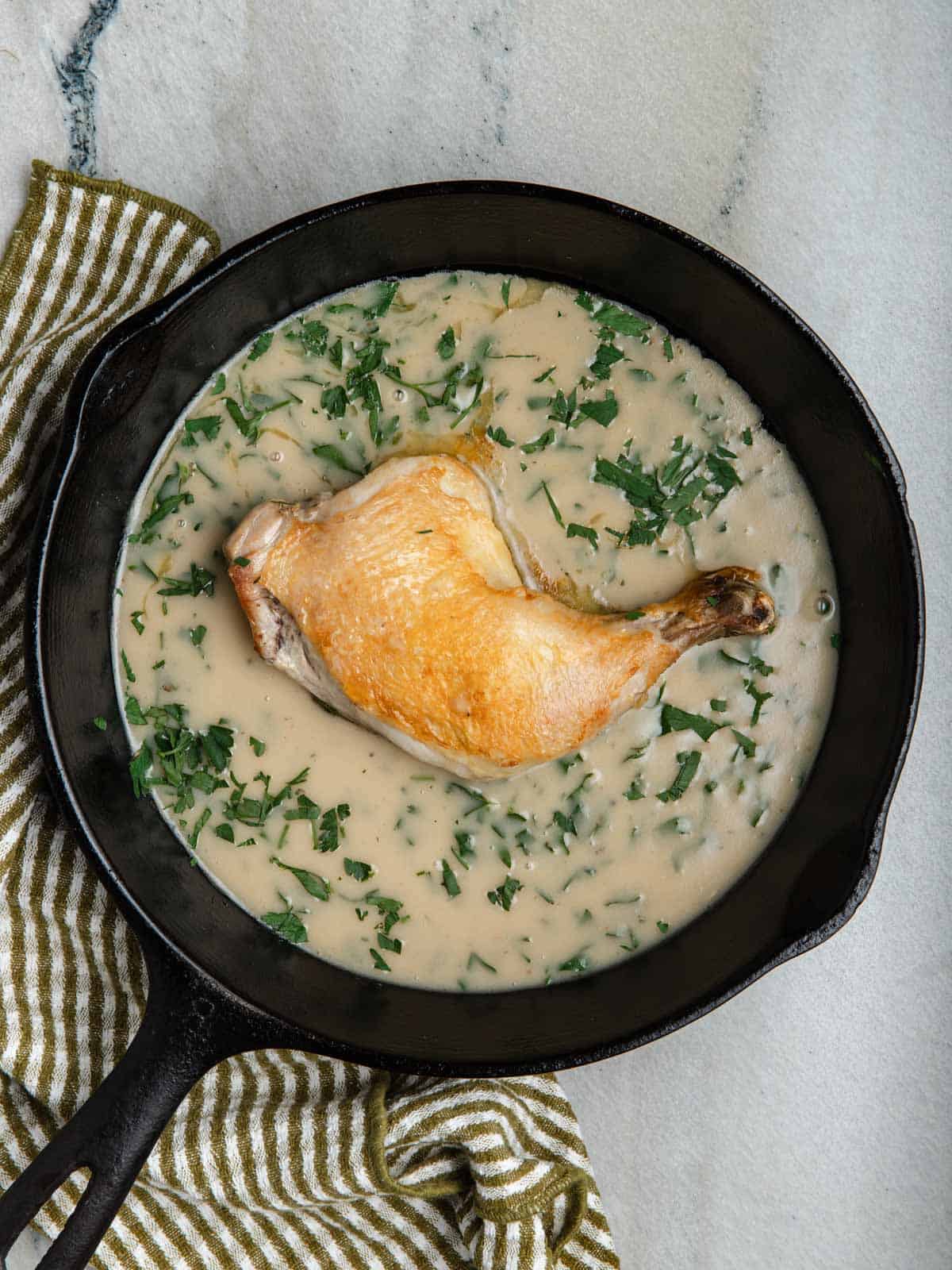
The Blond Roux
Velouté starts with a blond roux - equal parts fat and flour, cooked together before any liquid is added.
There are three roux types you'll encounter in classical French cuisine, defined entirely by how long you cook them:
- White Roux - cooked for 2-3 minutes. Just long enough to hydrate the flour and remove the raw taste. Used for Béchamel. Minimal color, minimal flavor development.
- Blond Roux - cooked for 3-5 minutes until it reaches a pale golden color and smells nutty. This is your roux for velouté.
- Brown Roux - cooked for 5 to 10 minutes or longer until deep brown. Used for Espagnole, gumbo, and dark sauces. The thickening power decreases as color deepens.
🧑🏼🍳 Chef Tip
As a roux darkens, its thickening power decreases. A dark roux has roughly half the thickening power of a white roux. This is why velouté uses a blond roux. Go too dark and your sauce becomes thin and brown. That's not velouté anymore.
For a full deep-dive on roux types, ratios, and technique, see the How to Make a Roux guide.
The Three Types of Velouté Sauce
The technique for every velouté is identical. The rule is simple: your stock should match your protein.
Chicken Velouté (Fond Blanc de Volaille)
The most common and versatile of the three and made with white chicken stock. This is your go-to for poultry dishes, pot pies, chicken gravies, and as the base for Sauce Suprême.
Fish Velouté (Fond de Poisson)
A fish stock made from fish bones, white wine, and aromatics. The flavor is delicate, light, and clean. Use this as the base for Sauce Normande or any seafood sauce.
Veal Velouté (Fond de Veau)
Made with veal stock. Veal velouté is the base for Sauce Allemande, one of the most classical daughter sauces. It's richer than chicken velouté, which makes it versatile as a sauce base.
🧑🏼🍳 Chef Tip
Your stock should match your protein.
Key Ingredients
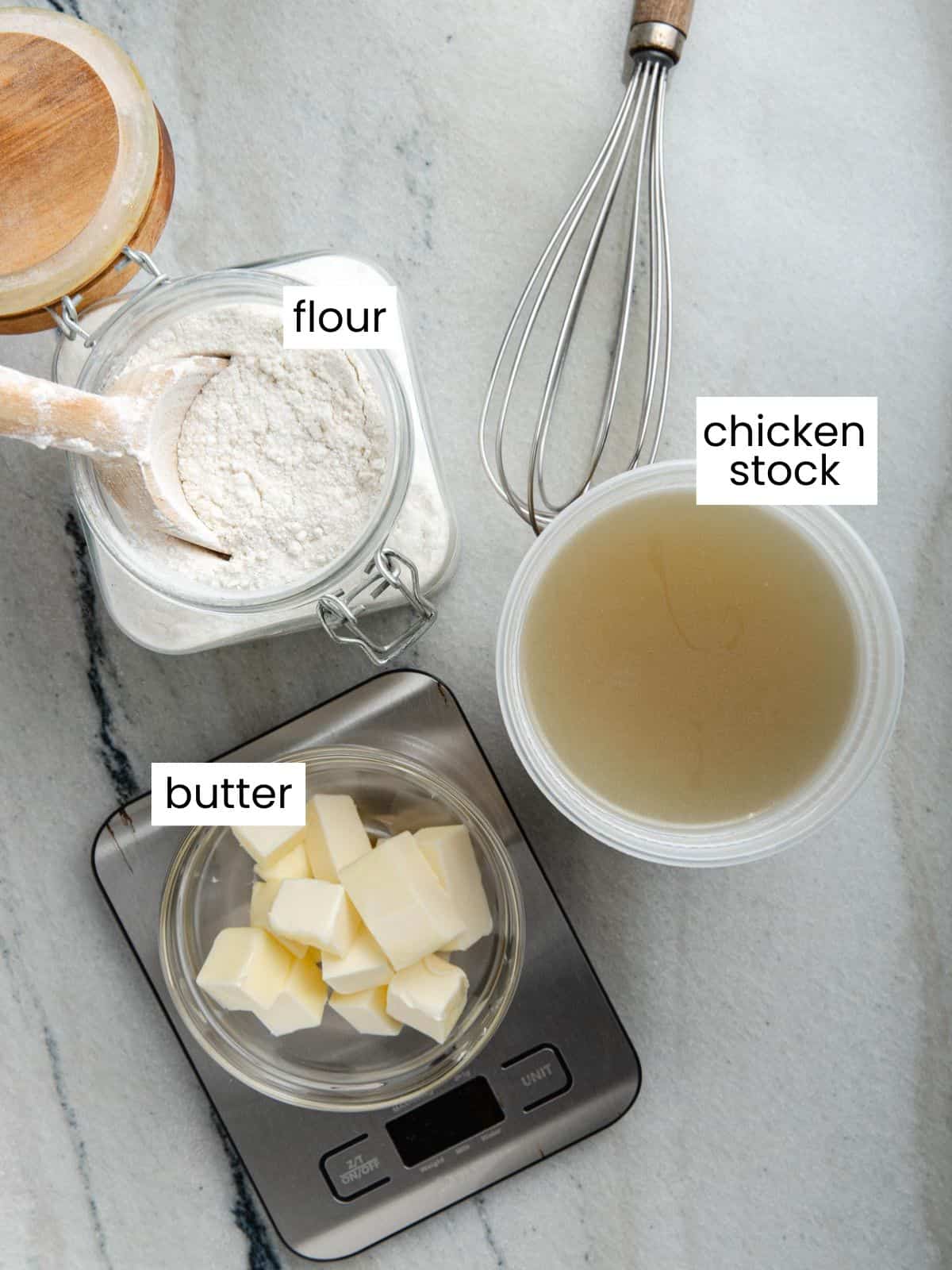
- Butter - use whole butter, clarified butter, or ghee. For a blond roux whole but is fine, but for a brown roux you'll want to use clarified butter so the milk solids don't burn.
- Flour - use AP flour. Weighing it keeps your ratios consistent and is the professional approach.
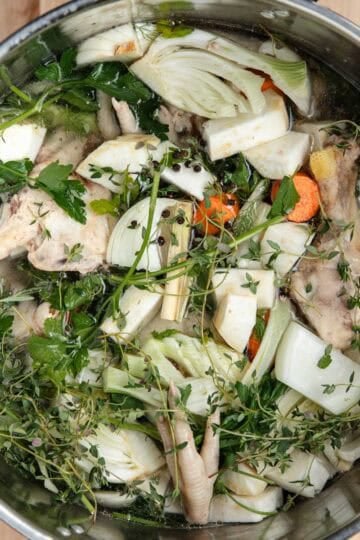
- Chicken Stock - homemade is always best. Store-bought works if it's low-sodium stock.
- Salt and Pepper - season to taste with salt and white pepper.
Save This Recipe!
Velouté Sauce Ratio's
The standard 1:1:15 ratio gives you a light, pourable velouté. It should coat the back of a spoon cleanly without feeling heavy or starchy.
If you're building a thicker sauce for a pot pie filling or a cream-based daughter sauce, increase your roux slightly. You're adjusting the thickening power, not the volume of liquid.
| Consistency | Butter | Flour | Stock |
|---|---|---|---|
| Light / Pouring | 1 part | 1 part | 15 parts |
| Medium / Coating | 1.5 parts | 1.5 parts | 15 parts |
| Thick / Base | 2 parts | 2 parts | 15 parts |
🧑🏼🍳 Chef Tip
Always favor the side of a thinner sauce. It's far easier to reduce a velouté that's too thin than to rescue one that's become a paste.
How to Make Velouté Sauce
Step 1: Mise En Place
Before the heat goes on have everything ready, this is mise en place. Warm your chicken stock in a separate saucepan over low heat. Have your butter and flour weighed out, and your wooden spoon and whisk within reach.
Step 2 : Make a Blond Roux
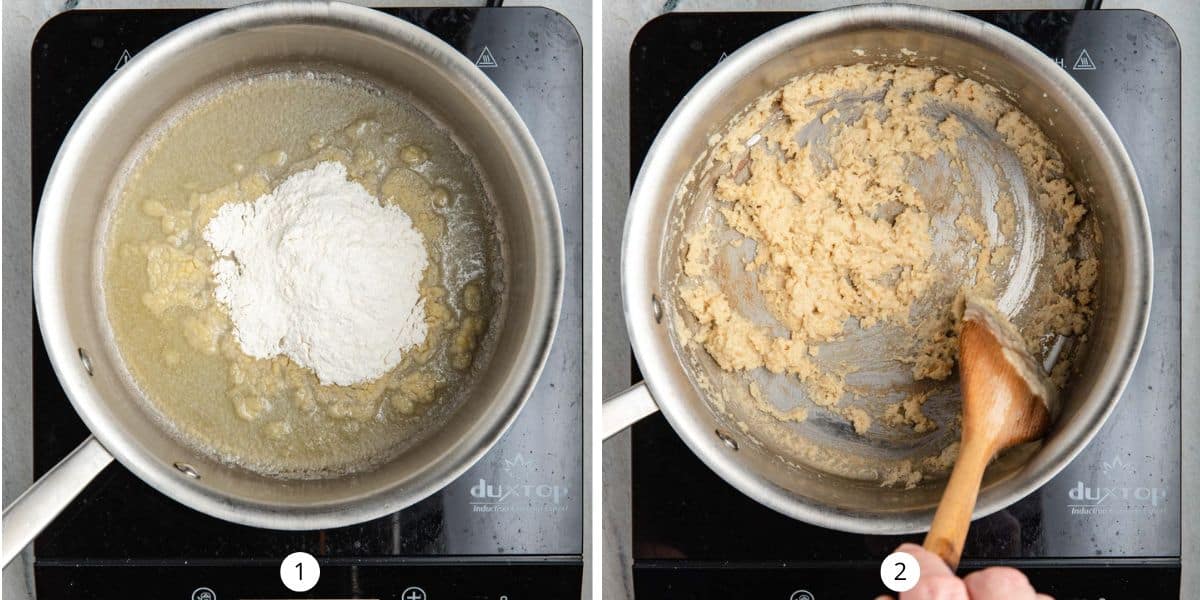
Melt the butter in a saucepan over medium-low heat. When it starts foaming, add all of your flour at once and begin stirring with a wooden spoon.
You want blond or peanut color. When it smells slightly nutty and looks like wet sand, you're there. Total time: 3 to 5 minutes over medium-low heat.
🧑🏼🍳 Chef Tip
If your roux still smells like raw flour, it isn't ready. Wait for the nutty aroma and a peanut color.
Step 3: Add Your Warm Stock
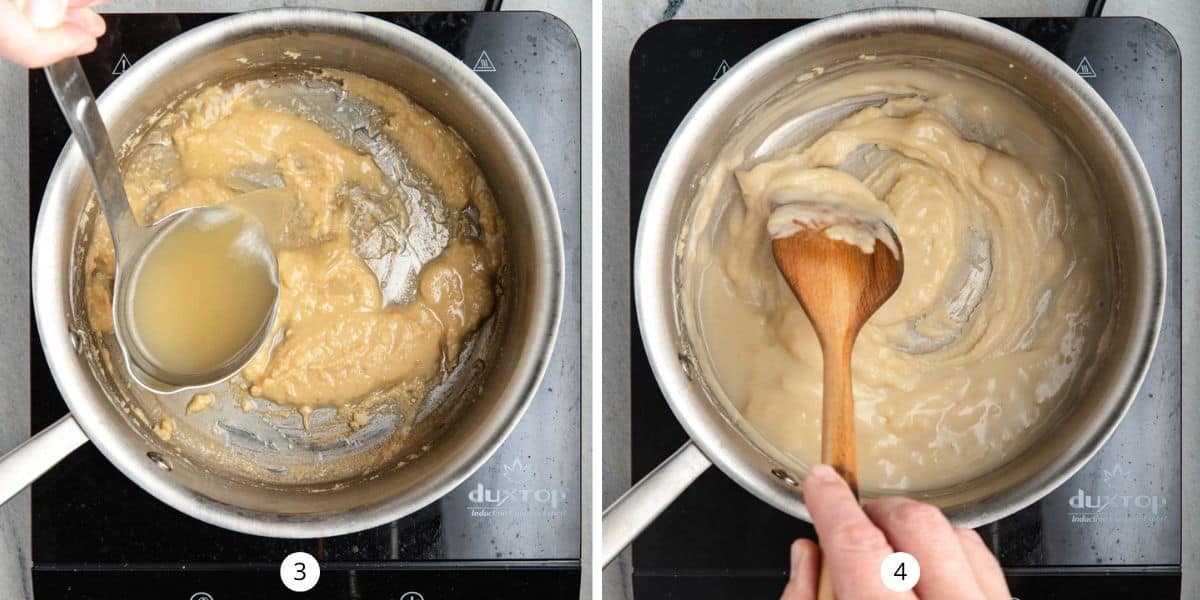
Start with a single ladle and stir it with your wooden spoon or spatula fully into the roux until the mixture is smooth (no lumps). Add a second ladle, stir again. Switch to a whisk. Once you've incorporated about half the stock and the sauce is completely lump-free, add the remaining stock and whisking continuously.
Step 4: Simmer
Reduce heat to low and simmer for 20 to 25 minutes, whisking occasionally. Don't walk away.
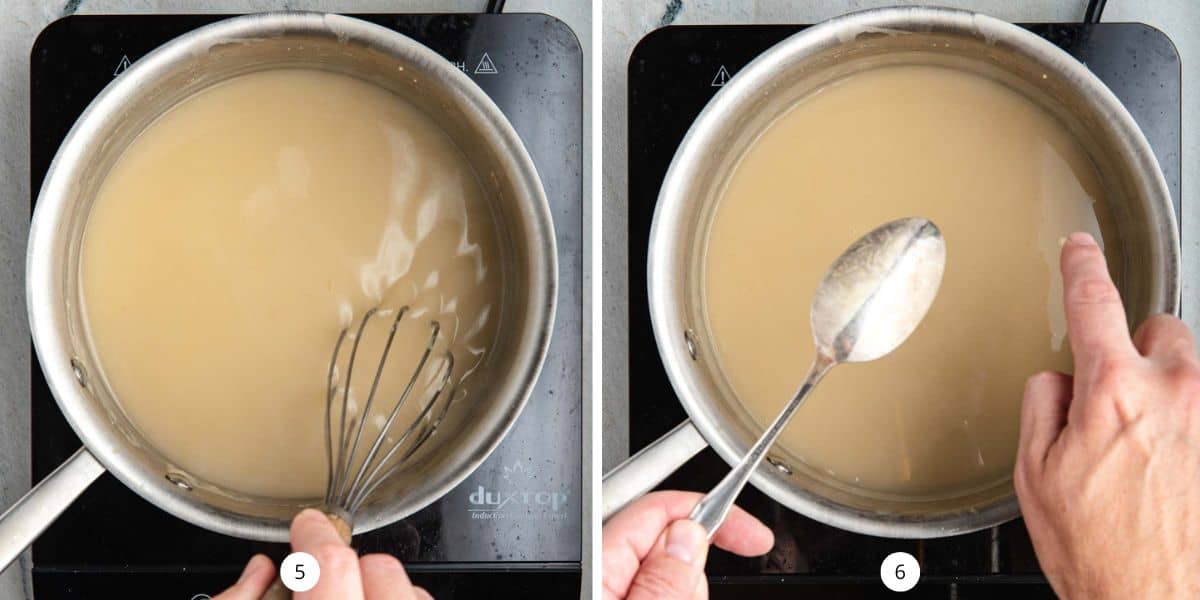
Step 5: The Nappe Test
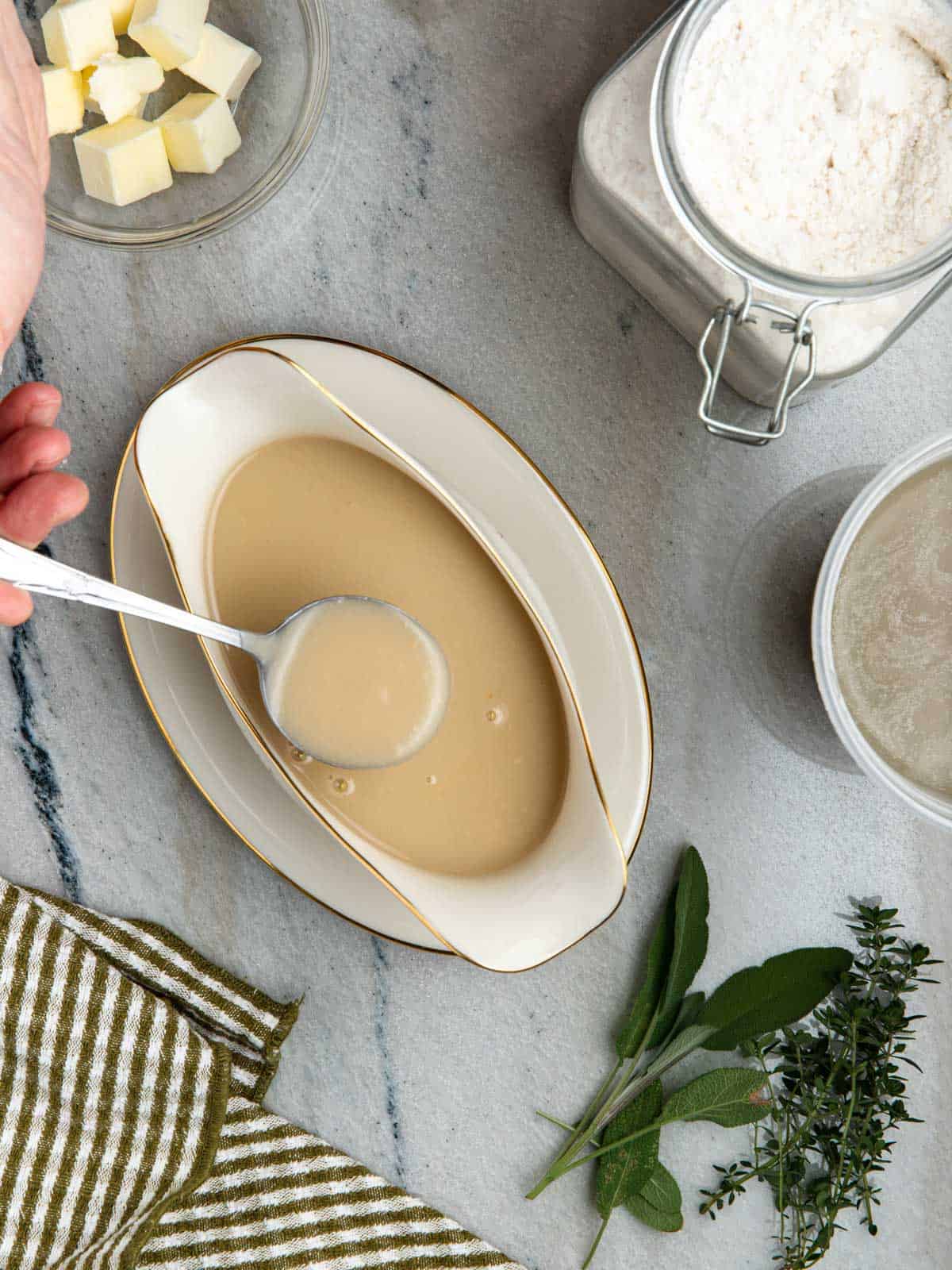
Dip a spoon into the sauce and run your finger across the back of it. If the line holds clean and the sauce doesn't flood back across - that's nappe (nah-PAY). That's the consistency you're after.
Too thin? Keep simmering. Too thick? Whisk in a splash of warm stock and bring it back.
Step 6: Season to Taste
Season with salt and white pepper. Taste it. Adjust. If you're serving immediately, finish by whisking in a small knob of cold whole butter off the heat - this is monter au beurre, mounting with butter.
If you're holding the sauce for service, lay a piece of plastic wrap directly on the surface of the sauce. This prevents a skin from forming.
What Is Velouté Sauce Used For?
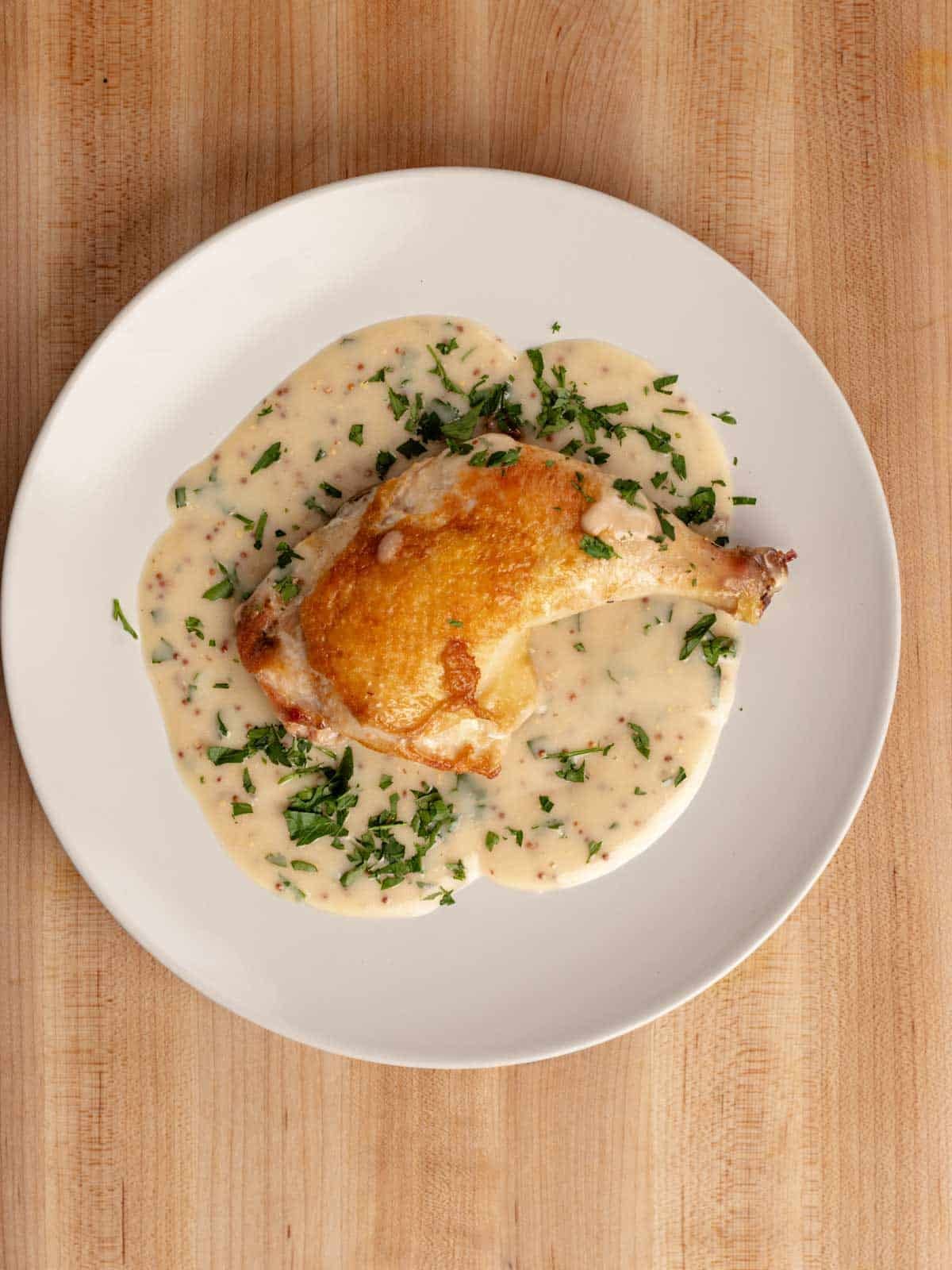
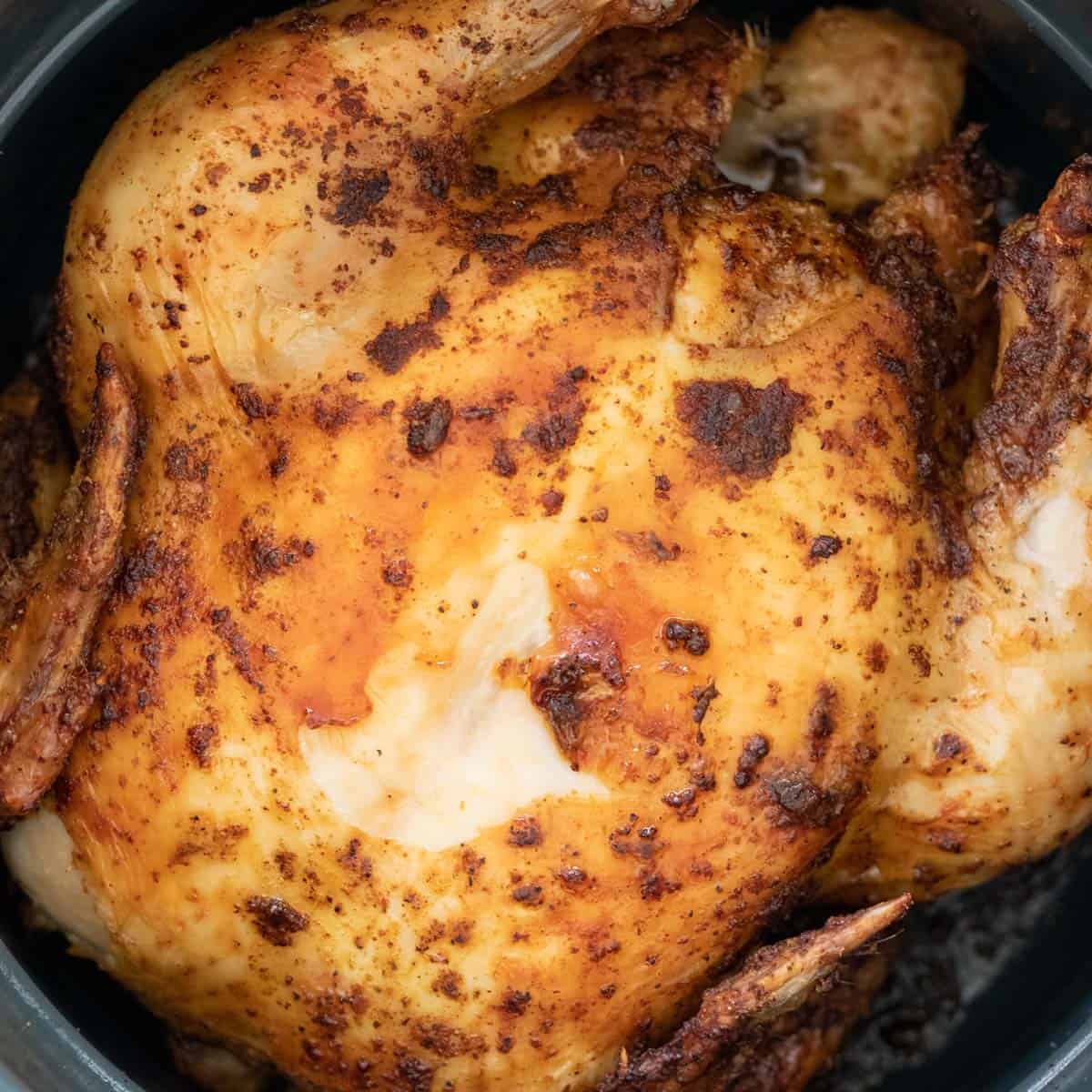
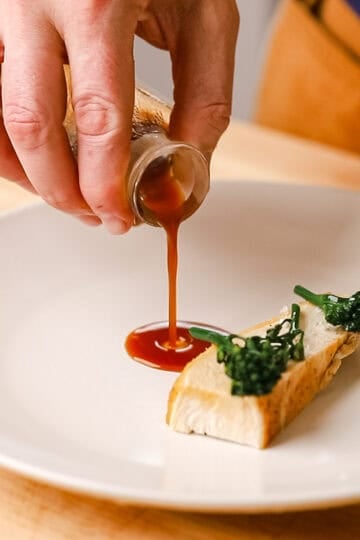
- Roasted or poached chicken - the most classic application. Ladle it over the top or serve on the side.
- Pan-seared or poached fish fillets - use fish velouté here, not chicken. The stock should always match the protein.
- Steamed or roasted vegetables - asparagus, leeks, and fennel pair well with this sauce.
- Chicken Pot Pie - thicken the ratio slightly and use as the creamy sauce base for chicken or turkey pot pie.
- Cream Soups - whisk in heavy cream and use this base for cream of chicken soup or broccoli and cheese soup.
- Foundation for daughter sauces - use for Sauce Suprême, Sauce Allemande, and Sauce Normande.
Velouté Daughter Sauces
Sauce Suprême
Reduce your chicken velouté, whisk in heavy cream, a squeeze of lemon juice, and finish with cold butter off the heat.
Sauce Iviore
Starts with a chicken velouté, heavy cream, tomato puree, and a squeeze of lemon juice. Serve with fresh crab.
Sauce Allemande
Built from veal velouté. Finish with a liaison of egg yolks and heavy cream, a squeeze of lemon juice, and white pepper.
Sauce Normande
Built from fish velouté with the addition of mushroom cooking liquid, oyster liquor, cream, and egg yolks. A classical French seafood sauce built for poached sole or halibut.
Sauce Poulette
Start with any velouté, add sautéed mushrooms, fresh parsley, and a finish of lemon juice.
Storage and Reheating
Refrigerator
Store in an airtight container with plastic wrap pressed directly on the surface of the sauce. Keeps for up to 3 days.
Freezer
Yes, your can freeze in an airtight container for up to 3 months. Plan to add a small amount of warm stock when reheating.
Reheating
Reheat gently over low heat, whisking constantly. If the sauce has broken or separated, whisk in a small amount of warm stock to bring it back together.
Velouté Sauce Recipe FAQs
Your roux wasn't cooked long enough. The raw flour taste is removed by gently cooking the roux. Cook until it smells slightly nutty before adding any liquid.
If the lumps formed when you added the stock, you added it too fast or the stock was too cold. Whisk vigorously while the sauce is on the heat. If they don't smooth out, strain it through a fine mesh sieve.
Velouté is made from a stock (veal, fish, or chicken) and thickened by a blonde roux and seasoned to taste.
Use This sauce here Specifically....


If you tried this Velouté Sauce recipe or any other recipes on my website, please leave a 🌟 star rating and let me know how it went in the 📝 comments below. I love hearing from you!
📖 Recipe

Velouté Sauce
Ingredients
- 1 ounce or 28g of butter
- 1 ounce or 28g of flour all-purpose
- 2 cups chicken stock
- salt to taste
- white pepper to taste
Instructions
- Warm your chicken stock in a separate saucepan over low heat. Do not allow it to boil.
- Melt butter in a heavy-bottomed saucepan over medium-low heat. Add flour all at once and stir constantly with a wooden spoon for 3-5 minutes until the roux smells nutty and looks like wet sand. This is your blond roux.
- Add warm stock one ladle at a time, stiring fully between each addition. Once half the stock is incorporated switch to a whisk, and add the remaining stock in a steady stream while whisking continuously.
- Return to medium heat and bring to a simmer. Reduce to low and cook for 20 to 25 minutes, whisking occasionally, until the sauce is pale golden and coats the back of a spoon.
- Season with salt and white pepper. Taste and adjust.
Notes
- Homemade chicken stock is rich in gelatin and will always deliver a better result than store-bought.
- Season with white pepper instead black pepper.
- To make Sauce Suprême: reduce the finished velouté and whisk in ¼ cup (60ml) heavy cream. Finish with cold butter off the heat.
- Refrigerate up to 3 days with plastic wrap pressed directly on the surface. Freeze up to 3 months - sauce may need re-whisking after thawing.
- The 1:1:15 ratio (butter:flour:stock by weight) is your baseline. Increase roux for a thicker sauce.

Mike Cleavenger says
A classical mother sauce that can be turned into so many delicious daughter sauces.